

You might wonder how long does it take for vitamins to work. Timelines vary by type. Water-soluble vitamins may show effects in days, while fat-soluble ones often need weeks or months.
Dr. Kelly Raj explains that it usually takes several weeks for vitamins to build up in your system, especially for vitamin D.
Try these tips for understanding the timeline and setting realistic expectations:
- Know that results come with time.
- Choose your supplements wisely.
- Check your health honestly.
- Stay dedicated to your goals.
Understanding the Timeline for Vitamins

How Long Do Vitamins Take to Work
You may ask, “how long do vitamins take to work?” The answer depends on the type of vitamins you take and your health needs. Understanding the timeline helps you set realistic expectations for vitamin efficacy. Water soluble vitamins, such as vitamin C and B vitamins, often show results faster than fat soluble vitamins. If you have a vitamin deficiency, you might notice changes in your health within a few weeks. For most supplements, the supplement effects timeline ranges from days to months.
Tip: If you start taking vitamin supplements for nutrition, track your progress over time. This helps you see the effects and understand your own timeline.
Water-Soluble vs. Fat-Soluble Vitamins
You need to know the difference between water soluble vitamins and fat soluble vitamins. Water soluble vitamins, like vitamin C and vitamin B12, dissolve in water and your body does not store them. You must replenish these nutrients often because your body removes extra amounts through urine. Fat soluble vitamins, such as vitamin D, A, E, and K, dissolve in fat and your body stores them in tissues. This means you do not need to take them as frequently.
Here is a simple table to help you compare:
| Vitamin Type | Storage in Body | Absorption Rate | Replenishment Frequency |
|---|---|---|---|
| Water-Soluble | Not stored | Easily absorbed | Needs frequent replenishment |
| Fat-Soluble | Stored in tissue | Absorbed with fat | Less frequent replenishment |
Water soluble vitamins require regular intake to maintain healthy levels. Fat soluble vitamins stay in your body longer, so you may notice their effects after several weeks or months. The vitamin absorption rate and bioavailability of vitamins depend on your nutrition and the type of vitamins you choose.
Supplement Effects Timeline
Understanding the timeline for vitamin supplements helps you know when to expect results. The timeframe for water soluble vitamins is usually shorter. For example, vitamin C absorption peaks about two hours after you take it. You may notice improvements in your health, such as better energy or immune support, within two weeks. B vitamins often show results in one to three weeks, especially if you have a deficiency.
| Vitamin | Time to Show Results |
|---|---|
| Vitamin C | 2 weeks |
| B Vitamins | 1 to 3 weeks |
Fat soluble vitamins take longer to show effects. Vitamin D levels peak in your blood about twelve hours after a large dose, but you may need several weeks or months to see changes in your health. For example, people with fibromyalgia or asthma who take vitamin D supplements often notice improvements after three months. If you use supplements for chronic conditions, the supplement effects timeline can extend to several months or even years.
| Vitamin | Timeline for Effects |
|---|---|
| Vitamin C | Absorption peaks at 120 minutes after ingestion. |
| Vitamin D | Serum concentrations peak at 12 hours after a large dose, returning to baseline in 3 days. |
| Vitamin B12 | Significant increase in holo-TC at 24 hours after three small doses. |
You can see how the timeline you can expect varies by the type of vitamins and your health goals. Here is a chart showing how long it takes for supplements to improve symptoms in different conditions:
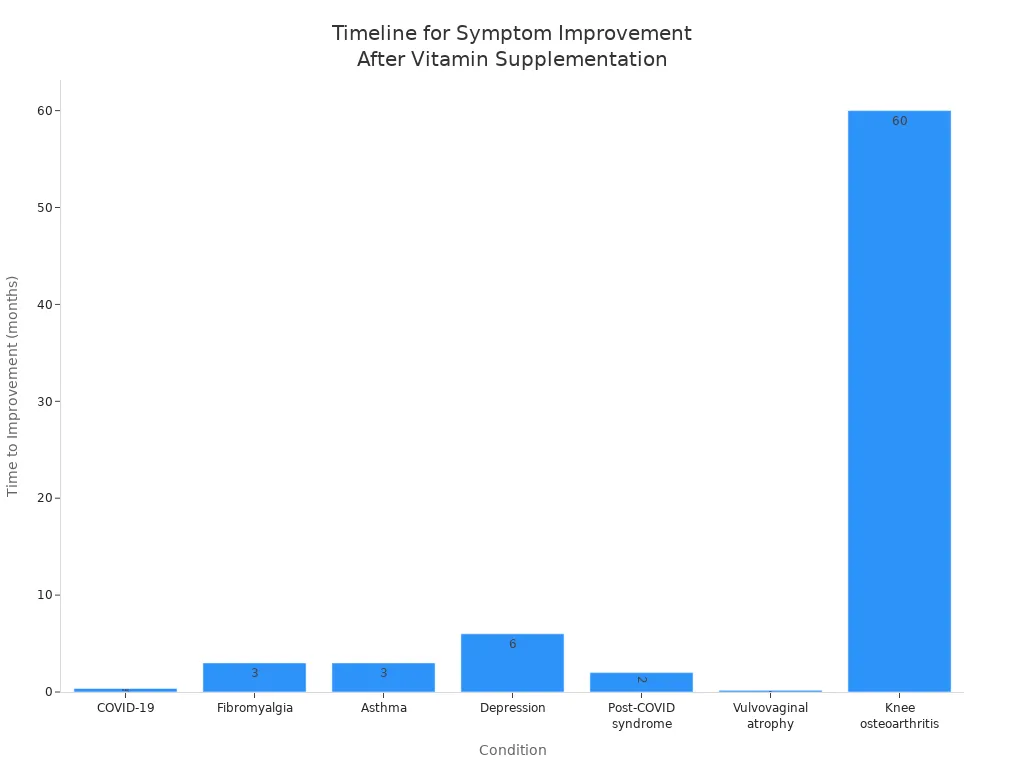
When you focus on nutrition and choose the right supplements, you support your health and boost the effectiveness of your routine. The bioavailability of vitamins and vitamin absorption depend on your diet, your health status, and how consistently you take your supplements. If you want to improve vitamin efficacy, pay attention to your nutrition and take your supplements as directed.
Note: The timeframe for correcting a vitamin deficiency is usually one to three months. You may notice effects such as improved energy, better mood, or stronger immunity as your body absorbs the nutrients.
Understanding the timeline for vitamins helps you make smart choices for your health. You learn how long it takes for supplements to work and how to adjust your nutrition for the best results. When you know the supplement effects timeline, you set realistic goals and track your progress with confidence.
Factors Affecting How Long Vitamins Take to Work

Deficiency Levels
Your starting point matters. If you have a severe vitamin deficiency, you may need more time to see improvements. For example, raising vitamin D levels often takes weeks with daily supplements, but severe deficiencies can take months to correct. Your body needs time to rebuild stores of nutrients. People with mild deficiencies usually notice changes faster than those with deeper nutrition gaps.
Tip: If you suspect a vitamin deficiency, talk to your doctor. Testing helps you understand your nutrition needs and set realistic goals.
Bioavailability and Consistency
Not all supplements work the same way. The quality and absorption of nutrients play a big role. Supplements with large particles may not absorb well, so your body only gets a small amount of the nutrients. Advanced technologies, like MICROGEL™, help improve vitamin absorption by making nutrients easier for your body to use. Consistency is key. You need to take vitamins regularly to maintain healthy levels. Skipping doses can slow your progress and delay health benefits.
- Supplements with poor absorption may only deliver about 20% of the nutrients.
- Regular intake supports steady nutrition and better health outcomes.
- Consistency helps you reach your goals faster.
Recognizing Vitamin Effects
You can spot signs that vitamins are working by paying attention to your body. Improved energy is a common effect. Vitamin B12 injections may boost energy in days. Vitamin D and iron often take 4-12 weeks to show full benefits. B vitamins help your body turn nutrients into energy. If you feel less tired or notice better mood, your nutrition plan may be working.
| Study Type | Findings | Population | Outcome |
|---|---|---|---|
| Randomised Controlled Trials | Better cognitive performance | School-aged children | Positive effects |
| Meta-analysis | Improved mood with B vitamins | Various groups | Significant mood boost |
| Supplementation Trial | Cognitive preservation with B vitamins | Women at risk | Benefits for low intake group |
Note: If you feel more energetic or notice better well-being, your supplements may be helping your health.
You can track your progress with supplements using digital tools. Here is a table showing common challenges and solutions:
| Challenges in Tracking Supplements | Proposed Solutions |
|---|---|
| Inaccurate database entries | Use of mHealth app for documentation |
| Variations in supplement ingredients | Integration with EMR for accuracy |
| Lack of patient disclosure | Improved patient-provider communication |
| Poor patient recall | Streamlined tracking process |
| Time requirements for manual entry | Faster reconciliation of information |
Best practices for monitoring vitamin effects include:
- Take vitamins consistently.
- Choose high-quality supplements.
- Remember, supplements do not replace a balanced diet.
Patience and regular tracking help you notice changes and support your health.
FAQ
How long should you take vitamin supplements to see results?
You usually notice changes in your health after one to three months of regular use. Track your progress and stay consistent for best results.
Can you take vitamins on an empty stomach?
Some vitamins, like vitamin C, work well on an empty stomach. Fat-soluble vitamins absorb better with food that contains healthy fats.
Do kids need vitamin supplements?
Kids need vitamin supplements if their diet lacks key nutrients. Ask your doctor before starting any supplement for your child.
Tip: Always read supplement labels and follow dosage instructions for safety.