

You may wonder about the impact of magnesium on atrial fibrillation. Recent studies show mixed results regarding its effectiveness. Some research found that IV magnesium improved heart rates, while other trials saw no extra benefit when combined with certain drugs. Here’s what the numbers say:
| Outcome | Magnesium Group | Control Group | OR (95% CI) |
|---|---|---|---|
| Overall response | 86% | 56% | 4.61 (2.67 to 7.96) |
| Major adverse effects | Similar risk | N/A | RR 0.85 (0.44-1.61) |
Low magnesium levels often occur in people with AFib. The impact of magnesium is significant as it helps your heart pump and keeps your rhythm steady. Always check with your doctor before making changes to your magnesium intake.
Impact of Magnesium on AFib

How Magnesium Affects Heart Rhythm
You may not realize how important magnesium is for your heart. Magnesium helps your heart cells send electrical signals. These signals keep your heart beating in a regular pattern. When you have enough magnesium, your heart can maintain a normal heart rhythm. If your magnesium level drops, you may notice abnormal heart rhythms or heart palpitations.
Magnesium works by balancing the movement of potassium and calcium in your heart cells. This balance helps control your heart rate and prevents irregular heartbeats. If you have hypomagnesemia, your heart cells become more active. This can increase your sinus rate by 36%, which may lead to tachycardia and abnormal heart rhythms. On the other hand, hypermagnesemia slows your sinus rate by 19%. This effect helps stabilize your heart’s electrical activity and reduces the risk of abnormal heart rhythms.
| Mechanism | Effect on Cardiac Activity |
|---|---|
| Hypomagnesemia | Increases sinus rate by 36%, leading to tachycardia and arrhythmias due to cell depolarization. |
| Hypermagnesemia | Slows sinus rate by 19% and promotes hyperpolarization, stabilizing electrical activity and reducing arrhythmias. |
Magnesium also affects the refractory period in your heart. The refractory period is the time when your heart cells recover before they can send another signal. When you receive intravenous magnesium, the PR interval and QRS duration get longer. This means your heart cells take more time to recover, which helps prevent abnormal heart rhythms. For example, the mean effective atrial refractory period can increase from 228 ms to 256 ms. The mean AV node functional refractory period can rise from 399 ms to 422 ms. These changes help your heart maintain a normal heart rhythm and improve rate and rhythm control.
Tip: Keeping your magnesium level in a healthy range may help you avoid heart palpitations and irregular heartbeats.
Research Findings on Magnesium and AFib
Many studies have looked at the impact of magnesium on atrial fibrillation. You may wonder if taking magnesium can help prevent afib or control abnormal heart rhythms. Some randomized controlled trials show that magnesium supplementation can lower the risk of new-onset postoperative atrial fibrillation. In a meta-analysis of 24 trials with 3,373 participants, people who received magnesium had a relative risk of 0.55 for postoperative afib compared to those who did not. This means magnesium may offer a protective effect. Subgroup analyses with lower risk of bias showed an even stronger effect, with a relative risk of 0.70.
You should know that research has some limitations.
- Sample size issues: Some studies had too few participants compared to larger meta-analyses.
- Variability in coagulation results: The effect of magnesium on blood clotting can change depending on your health condition.
- Structural limitations: If you have left atrial enlargement from mitral valvular heart disease, magnesium infusion may not work as well.
You may benefit from magnesium if you have low levels or if you are at risk for abnormal heart rhythms. Magnesium can help with heart rate control and support a normal heart rhythm. However, magnesium may not help everyone with atrial fibrillation. You should talk to your doctor before starting magnesium supplements, especially if you have other heart problems or take medications.
Note: Magnesium plays a key role in preventing abnormal heart rhythms and heart palpitations, but its impact on afib depends on your individual health.
Understanding Atrial Fibrillation
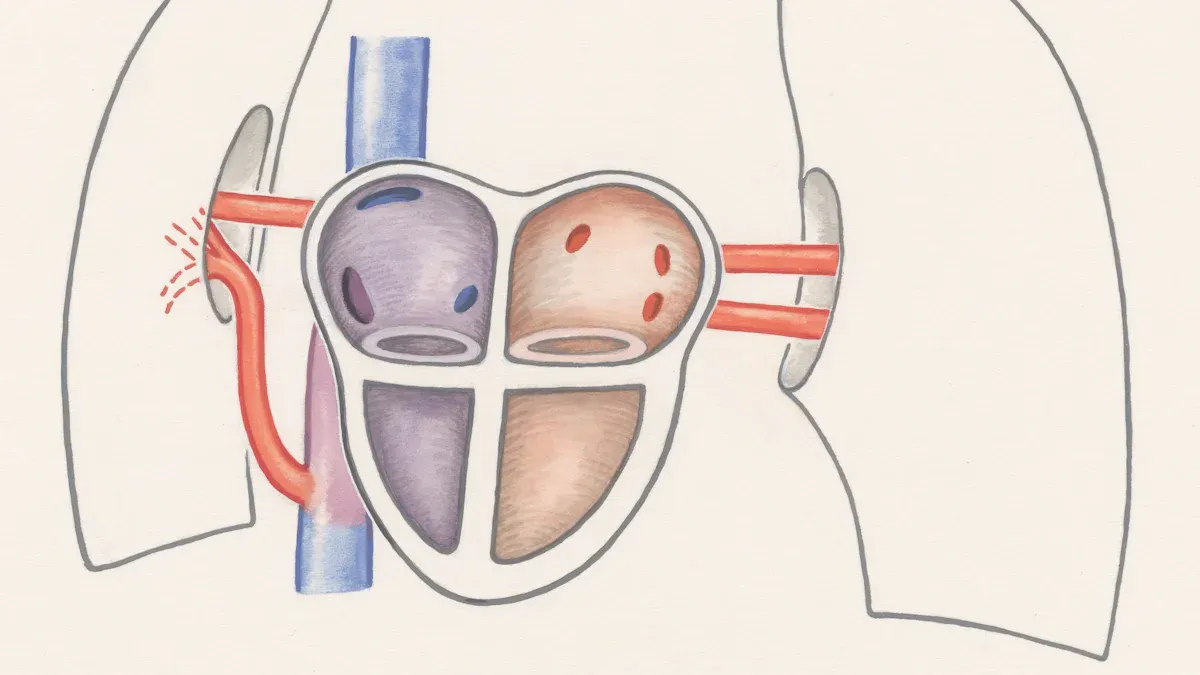
What Is Atrial Fibrillation?
Atrial fibrillation is a common heart rhythm problem. Your heart has four chambers. The top two chambers are called the atria. In atrial fibrillation, these chambers beat in a fast and irregular way. This can make your heart feel like it is racing or fluttering. You may notice shortness of breath, tiredness, or chest discomfort.
Atrial fibrillation affects millions of people around the world. Here are some facts about its global impact:
- About 37.57 million people have atrial fibrillation, which is about 0.51% of the world’s population. This number has grown by 33% over the last 20 years.
- The number of cases reached 52.55 million, and the condition caused 338,947 deaths.
- In 2016, experts estimated that 46.3 million people worldwide had atrial fibrillation.
- The number of people with atrial fibrillation will likely rise a lot in the next 30 to 50 years.
Doctors have found that certain risk factors make atrial fibrillation more likely. High blood pressure is the biggest risk, especially as you get older. Being overweight or obese also increases your risk. Keeping these factors under control can help prevent atrial fibrillation.
Why Magnesium Matters for AFib
Magnesium plays a key role in how your heart works. It helps control the flow of minerals like calcium, potassium, and sodium in your heart cells. These minerals help your heart keep a steady rhythm. Magnesium also affects how long your heart cells take to recover between beats. This helps prevent abnormal rhythms.
You may wonder if low magnesium levels can lead to atrial fibrillation. Studies show a strong link between low magnesium and a higher risk of atrial fibrillation. Here is what researchers have found:
| Study | Findings |
|---|---|
| Database evaluation | Low magnesium linked to new cases of atrial fibrillation over time. |
| Framingham Offspring Study | Low magnesium tied to atrial fibrillation in people without heart disease. |
| ARIC Study | Low magnesium linked to atrial fibrillation in people with heart risks. |
Magnesium helps your heart by:
- Modulating important ion channels, such as calcium, potassium, and sodium.
- Regulating how your heart responds and how long each beat lasts.
- Slowing down signals in your heart to keep the rhythm steady.
If you keep your magnesium levels healthy, you may lower your risk of atrial fibrillation. You should talk to your doctor before making any changes to your magnesium intake.
Can Magnesium Prevent AFib Episodes?
Evidence for Prevention
You may ask if magnesium can help prevent afib or lower your risk of atrial fibrillation. Many studies show that magnesium plays a role in keeping your heart rhythm steady. If you have magnesium deficiency, you may notice more heart palpitations and a higher risk of atrial fibrillation. Researchers found that people with low magnesium levels often have more trouble with irregular heartbeats.
You should know that taking magnesium does not always prevent afib episodes for everyone. Some people see benefits, but others do not. Your risk of atrial fibrillation depends on many factors, such as age, blood pressure, and overall heart health. Magnesium helps your heart cells work better, but it cannot fix every cause of afib.
Doctors often check magnesium levels in people with heart palpitations. If you have magnesium deficiency, you may need to increase your intake through food or supplements. You should talk to your doctor before making changes. Magnesium can help lower the risk of atrial fibrillation in some cases, but it does not work for everyone.
Tip: Eating foods rich in magnesium, such as nuts, seeds, and leafy greens, may help support your heart and reduce heart palpitations.
Postoperative AFib and Magnesium
You may wonder how magnesium affects people after heart surgery. Postoperative atrial fibrillation happens in about 20–40% of cardiac surgery patients. This condition can cause heart palpitations and make recovery harder. Doctors found that magnesium can help reduce the risk of atrial fibrillation after surgery.
- Postoperative atrial fibrillation affects 20–40% of people who have heart surgery.
- Magnesium supplementation may help lower the risk of atrial fibrillation after surgery.
- A pilot study showed that keeping serum magnesium between 1.5–2.0 mmol/L can decrease the chance of postoperative afib.
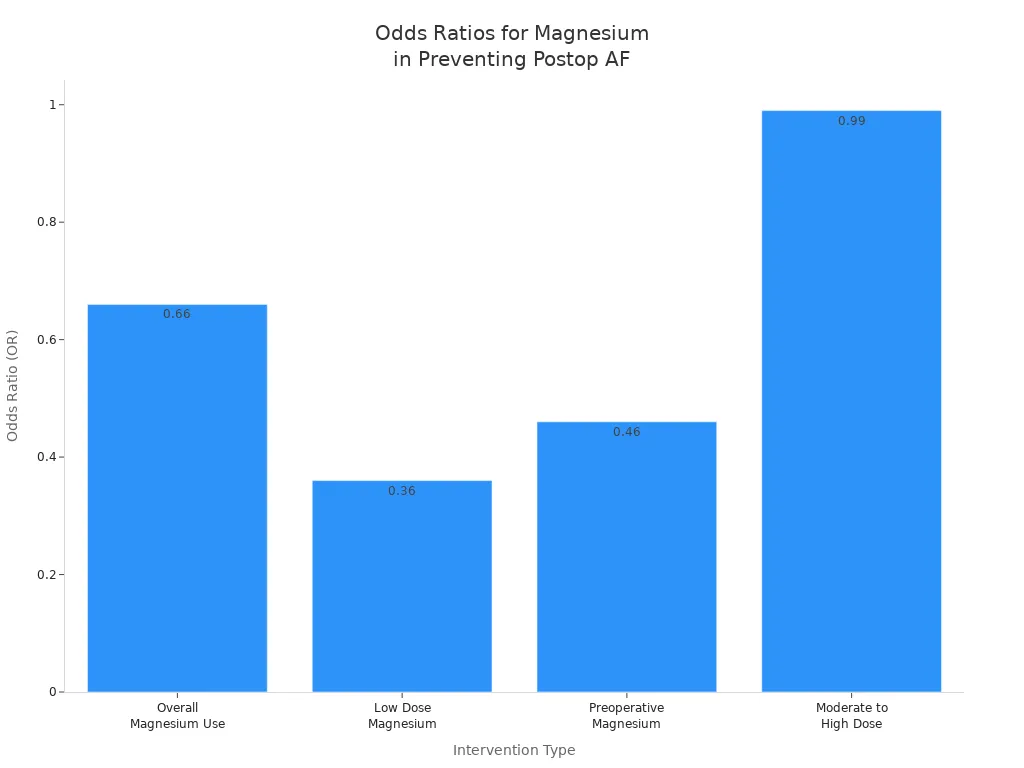
Researchers looked at different ways to use magnesium before and after surgery. Meta-analyses show that magnesium can make a big difference. You can see the results in the table below:
| Intervention Type | Odds Ratio (OR) | 95% Confidence Interval (CI) |
|---|---|---|
| Overall Magnesium Use | 0.66 | 0.51 to 0.87 |
| Low Dose Magnesium | 0.36 | 0.23 to 0.56 |
| Preoperative Magnesium | 0.46 | 0.31 to 0.67 |
| Moderate to High Dose | 0.99 | 0.70 to 1.42 |
The odds ratio shows how much magnesium lowers the risk of atrial fibrillation after surgery. Lower numbers mean a bigger effect. Low dose and preoperative magnesium seem to work best. Moderate to high doses do not show much benefit.
You should remember that magnesium works best for people with low levels or those at high risk of atrial fibrillation after surgery. Doctors use magnesium to help prevent afib and reduce heart palpitations in these patients. If you plan to have heart surgery, ask your doctor about magnesium and how it may help you.
Note: Magnesium can help prevent afib episodes after surgery, but it may not work for everyone. Always check with your healthcare provider before starting magnesium supplements.
Using Magnesium Safely
Food vs. Supplements
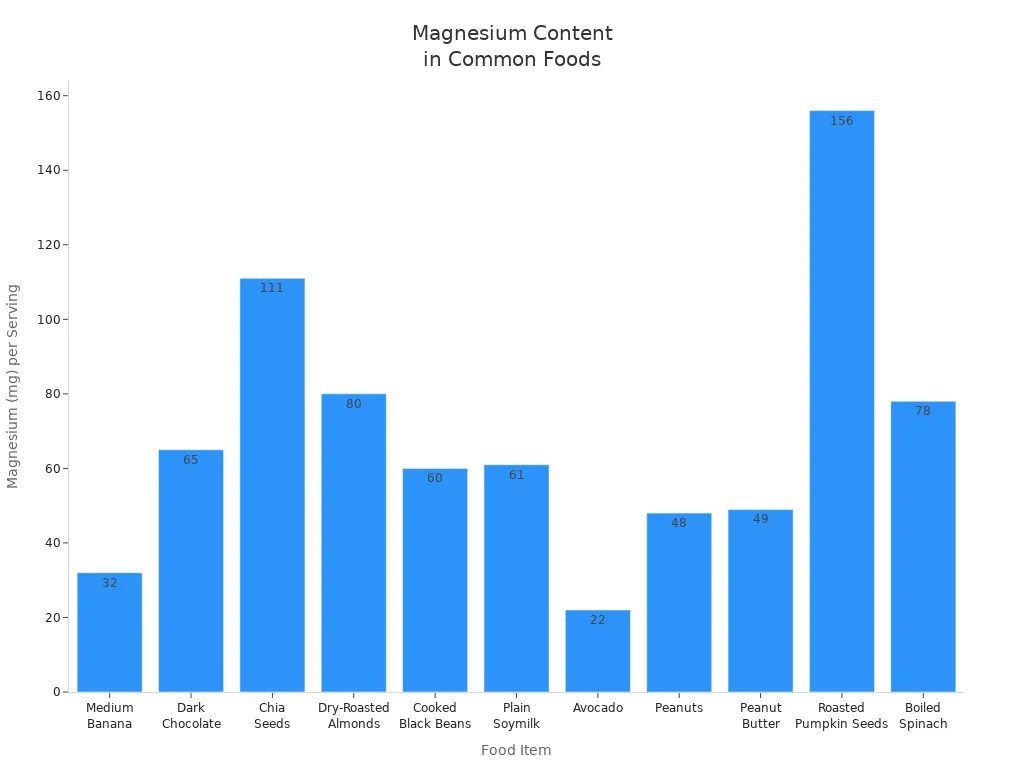
You can get magnesium from both food and magnesium supplements. Many people choose food first because it offers other nutrients and supports natural magnesium absorption. Foods like nuts, seeds, beans, and leafy greens give you a steady source of magnesium. The table below shows how much magnesium you get from common foods:
| Food Item | Magnesium Content (mg) per Serving | Serving Size |
|---|---|---|
| Medium Banana | 32 | 1 medium |
| Dark Chocolate (70-85%) | 65 | 1 ounce |
| Chia Seeds | 111 | 1 ounce |
| Dry-Roasted Almonds | 80 | 1 ounce |
| Cooked Black Beans | 60 | 1/2 cup |
| Plain Soymilk | 61 | 1 cup |
| Avocado | 22 | 1/2 cup |
| Peanuts | 48 | 1 ounce |
| Peanut Butter | 49 | 2 tablespoons |
| Roasted Pumpkin Seeds | 156 | 1 ounce |
| Boiled Spinach | 78 | 1/2 cup |
Magnesium supplements can help if you have low magnesium levels or trouble getting enough from food. You may notice that magnesium from food and well-absorbed supplements, like magnesium acetate, have similar effects. Some supplements, especially organic forms, offer higher bioavailability than inorganic ones. Mineral water with magnesium also works well. Supplements may help you reach healthy magnesium levels faster, but food supports long-term health.
Dosage and Safety
You should know the safe limits for magnesium supplementation. Health experts set the tolerable upper intake level for magnesium supplements at 350 mg per day. Some new research suggests that healthy adults can safely take up to 500 mg per day. The FDA limits health claims on supplements to 350 mg of magnesium. The Council for Responsible Nutrition also supports a 500 mg limit for healthy adults.
Tip: Always check the label on magnesium supplements and talk to your doctor before increasing your magnesium intake.
Risks and Interactions
Taking too much magnesium can cause problems. You may experience nausea, diarrhea, or stomach pain. High doses of magnesium supplements, especially magnesium citrate, often lead to more stomach complaints than other forms like magnesium oxide. Some people report muscle weakness, fatigue, or even changes in heart rhythm. These side effects happen more often with high-dose supplementation.
- Gastrointestinal complaints are common with magnesium supplementation.
- Magnesium citrate at 450 mg per day causes more stomach issues than placebo.
- Magnesium oxide causes fewer complaints than magnesium citrate.
You should also watch for magnesium and medication interactions. Magnesium supplements can affect blood thinners, antibiotics, diuretics, blood pressure medicines, and some diabetes drugs. Always tell your doctor about all supplements you take.
When to Consult a Doctor
You should talk to your doctor before starting magnesium supplementation, especially if you have heart problems or kidney disease. Your doctor may check your magnesium levels and help you choose the right treatment protocol. If you have kidney issues, your doctor may use incremental dosing and monitor your blood to avoid too much magnesium. For people with normal kidney function, protocolized infusions are safe when monitored.
| Monitoring Strategy | Description |
|---|---|
| Cardiac magnesium infusion protocol | Helps manage certain heart rhythm problems and lowers the risk of cardiac arrest. |
| Incremental dosing in renal failure | For people with low kidney function, doctors increase magnesium slowly and check blood levels. |
| Protocolized infusions in sufficient renal function | Safe for people with healthy kidneys when doctors monitor magnesium levels. |
Note: Always consult your healthcare provider before starting or changing magnesium supplements, especially if you take other medications or have health conditions.
You have learned that magnesium may lower your risk of atrial fibrillation, as shown in studies with over 4,000 people:
| Study Focus | Key Findings |
|---|---|
| Magnesium levels and cardiovascular diseases | Inversely associated with the risk of atrial fibrillation and other cardiovascular diseases. |
Research has some gaps, including small sample sizes and different study designs:
| Limitation/Gaps in Research | Description |
|---|---|
| Small Sample Sizes | Studies often include only 15 to 57 patients, limiting generalizability. |
| Variability in Study Design | Different methodologies used across studies complicate comparisons. |
If you consider magnesium for heart health, follow these steps:
- Talk to your doctor before starting supplements.
- Check your magnesium levels.
- Add magnesium-rich foods to your diet.
- Watch for interactions with medications.
FAQ
Can magnesium supplements stop an AFib episode?
Magnesium supplements may help some people with AFib, but they do not stop every episode. You should talk to your doctor before using magnesium for this purpose.
What foods give you the most magnesium?
You get the most magnesium from foods like pumpkin seeds, almonds, spinach, and black beans. Try to eat a variety of these foods each week.
Is it safe to take magnesium with heart medication?
Always check with your doctor before mixing magnesium with heart medicine. Some drugs interact with magnesium and may change how your body reacts.
How do you know if you have low magnesium?
You may feel muscle cramps, weakness, or irregular heartbeats. Your doctor can check your magnesium level with a blood test.