

You may wonder what the right methyl folate dosage is for MTHFR in 2025. Many people carry MTHFR mutations, with homozygous TT mutations found in 15.3% of the population and heterozygous CT polymorphisms in 38.2%. Your methylfolate dosage depends on several factors, such as age, pregnancy, and health status. Common influences include genetic polymorphisms, effectiveness of folate forms, and changing needs during pregnancy. You should start with a low dose, watch for changes, and talk with your healthcare provider before making adjustments.
Methyl Folate Dosage Basics

What Is MTHFR?
You may have heard about the MTHFR gene mutation. This gene helps your body process folate. When you have a mutation, your body cannot use folate as well. The MTHFR enzyme plays a key role in folate metabolism.
- It helps change 5,10-methylenetetrahydrofolate into 5-methyltetrahydrofolate.
- This step is important for turning homocysteine into methionine.
If your body cannot do this well, you may have higher homocysteine levels. This can affect your health.
| Evidence Type | Description |
|---|---|
| MTHFR C677T Mutation | This genetic variant impairs the conversion of folic acid to its active form, leading to an accumulation of unmetabolized folic acid in the bloodstream. |
| Health Risks | Associated with elevated homocysteine levels, depression, bipolar disorder, schizophrenia, and heart disease. |
| Clinical Implications | Particularly concerning for pregnant women, as excessive folic acid intake can adversely affect maternal and fetal health. |
| Recommended Alternative | Use of 5-MTHF instead of folic acid to mitigate risks for individuals with the MTHFR mutation. |
Why Methylfolate Matters
You need methylfolate because it is the biologically active form of methylfolate. Your body uses it right away. If you have an mthfr gene mutation, you may not convert folic acid into methylfolate easily. This can lead to problems with folate metabolism. Methylfolate helps your body keep homocysteine levels normal. It supports your brain, heart, and cell health. Many experts recommend methylfolate dosage for people with MTHFR mutations.
Methylfolate vs. Folic Acid
You may wonder about the difference between methylfolate and folic acid. Methylfolate is the active form. Your body absorbs it directly. Folic acid is synthetic. Your body must change it before it works. If you have trouble with folate metabolism, folic acid may not help you. Methylfolate dosage works better for people with MTHFR mutations.
| Feature | Methylfolate | Folic Acid |
|---|---|---|
| Form | Active form, bioavailable immediately | Synthetic form, requires conversion |
| Absorption | Directly absorbed | Requires enzymatic conversion |
| Efficacy | More effective, especially for MTHFR variants | Less effective in some individuals |
- Methylfolate is utilized immediately by the body, which is helpful for those with MTHFR gene variants.
- Folic acid needs conversion by dihydrofolate reductase, which is not efficient for everyone.
Tip: If you want to support healthy folate metabolism, choose methylfolate over folic acid, especially if you have an MTHFR mutation.
Recommended Dosage of L-Methylfolate
Starting Methylfolate Dosage
You may feel unsure about where to begin with methylfolate supplementation. Most experts suggest starting with a low methyl folate dosage. For adults, many healthcare providers recommend starting at less than 1 mg per day. You can begin with 500 mcg (0.5 mg) or even lower. This approach helps your body adjust and lets you watch for any side effects. Some clinical guidelines suggest starting at 5mg for three weeks, then increasing to 10mg, and later to 15mg if needed. However, starting at 5mg may not suit everyone, especially if you have never tried methylfolate before.
For children with an MTHFR gene mutation, doctors sometimes use higher doses. For example, a five-year-old child with MTHFR deficiency started on 7.5 mg of L-methylfolate daily and showed improvements in behavior within two weeks. Always talk to your healthcare provider before giving methylfolate to children.
Tip: Start low and go slow. Begin with the lowest dose possible and increase only if your doctor recommends it.
Dosage for Pregnancy and Special Cases
Pregnancy changes your body’s needs. If you have an MTHFR gene mutation, you need to pay special attention to your methylfolate dosage. The recommended dosage of l-methylfolate during pregnancy ranges from 800 mcg to 5 mg per day. This range depends on your health, the severity of your mutation, and your doctor’s advice. Most pregnant women take between 400 mcg and 800 mcg daily, but those with MTHFR mutations often need more.
Methylfolate and pregnancy go hand in hand because proper supplementation helps prevent neural tube defects. Neural tube defects can develop early in pregnancy, so you should start methylfolate supplementation before conception if possible. If you have a history of neural tube defects in your family, your doctor may suggest a higher dose.
Some people have other health conditions, such as depression or heart disease. In these cases, your doctor may recommend higher doses. For example, people with depression who do not respond to SSRIs sometimes take 15 mg of L-methylfolate daily. This higher dose can help improve symptoms, especially if you have certain genetic markers. However, high doses may carry risks, such as a possible increase in colon cancer risk for some people. Always discuss your health history with your provider before changing your dosage.
Note: Combining methylfolate with methyl B12 can support your nervous system and help your body use folate more effectively.
Maximum Safe Dosage
You may wonder how much methylfolate is too much. Toxicology studies show that adults can safely take up to 15 mg of L-methylfolate daily for up to a year without serious side effects. Patients with high homocysteine levels who took 15 mg daily for two months reported no problems. Some people use a cycle of one month on 15 mg, followed by two months off, with no complaints.
Healthcare providers usually reserve doses above 5 mg for special cases, such as major depressive disorder or severe MTHFR mutations. The 5, 10, and 15mg doses are common in clinical practice. You should not take more than 5 mg daily unless your doctor supervises you. High doses may help some people, but they are not for everyone.
| Dosage Level | Typical Use Case | Safe for Long-Term Use? |
|---|---|---|
| 0.5–1 mg | General supplementation, starting dose | Yes |
| 5 mg | Pregnancy, moderate deficiency | Yes |
| 10–15 mg | Depression, severe deficiency, special cases | Yes (with supervision) |
Always check with your healthcare provider before increasing your methylfolate dosage. Regular monitoring helps you avoid side effects and ensures you get the benefits of methylfolate supplementation.
Factors Affecting Methylfolate Dosage

Age and Health Status
Your age and health play a big role in how your body uses methylfolate supplementation. Children, adults, and seniors all process nutrients differently. If you are pregnant, your body needs more folate to support your baby’s growth. Health conditions like depression, anxiety, or heart disease can also change your needs. For example, people with depression or anxiety may need higher doses to help with mood. If you have a history of neural tube defects or other health issues, your doctor may suggest a different dosage. Always share your full health history with your provider before starting methylfolate supplementation.
Medications and Interactions
Some medications can affect how your body uses methylfolate supplementation. Certain drugs lower the effectiveness of methylfolate, which means you might need a different dose. Here is a table showing common medications that interact with methylfolate supplementation:
| Medication Name | Interaction Type |
|---|---|
| capecitabine | Major |
| carbamazepine | Major |
| divalproex sodium | Moderate |
| methotrexate | Major |
| phenytoin | Major |
| trimethoprim | Moderate |
| pyrimethamine | Moderate |
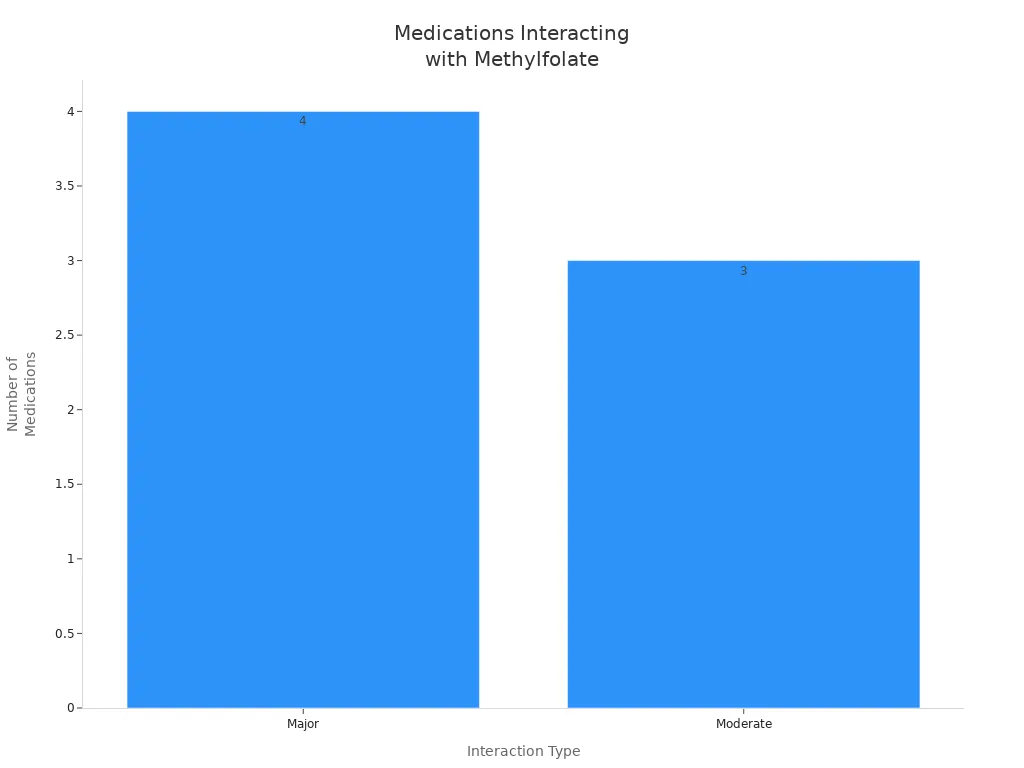
If you take anticonvulsants like phenytoin or carbamazepine, or if you use methotrexate, your body may not absorb methylfolate well. This can affect your mood, anxiety, and depression. Your doctor may need to adjust your methylfolate supplementation if you use these medications.
Personalization and Monitoring
You need a plan that fits your unique needs. Genetic testing can help you and your doctor find the right methylfolate supplementation. Here is a guide for personalizing your dosage:
| Genetic Status | Recommended Dosage |
|---|---|
| Low support (preventive) | 400–800 mcg/day |
| Moderate support (MTHFR heterozygous) | 800–1,200 mcg/day |
| High support (MTHFR homozygous) | 1,600–5,000 mcg/day |
- Combine methylfolate supplementation with methyl B12 and P-5-P for better results.
- Take your supplement with food to help your body absorb it.
- Watch for changes in anxiety or depression, and ask your doctor about lab tests for homocysteine and B vitamins.
Regular check-ins with your healthcare provider help you stay safe and get the most from your methylfolate supplementation. Your needs may change over time, so keep track of your symptoms and talk to your doctor about any changes in mood, anxiety, or depression.
Safety and Supplementation Tips
Signs of Over- or Under-Supplementation
You need to watch for signs that your methylfolate supplementation is not balanced. Too much methylfolate can cause:
- Severe anxiety
- Nausea
- Insomnia
- Migraines
- Irritability
- Achy joints
- Headaches
- Rash
- Acne
- Fatigue
- Dry mouth
- Palpitations
- Sore muscles
If you do not get enough methylfolate, you may notice:
- Depressive symptoms
- Cognitive decline
- Neurological symptoms
- Psychiatric disorders
If you feel any of these symptoms, talk to your doctor about your dosage or switch to a different brand of prenatal vitamins.
How to Take Methylfolate Safely
You can make methylfolate supplementation safer by following these tips:
- Take your supplement regularly for the best results.
- Use a full glass of water unless your doctor tells you otherwise.
- If your stomach feels upset, take methylfolate supplementation with food.
- Avoid antacids, dairy, tea, or coffee within two hours before or after taking your supplement.
- Stay upright for at least ten minutes after taking methylfolate supplementation.
- Tell your doctor if you have allergies to ingredients in prenatal vitamins, such as fish, soy, or peanuts.
Taking methylfolate supplementation in the morning or with lunch can boost your energy and alertness. It also helps you avoid sleep problems at night. Many people find that taking methylfolate supplementation with food prevents stomach discomfort.
Tip: Take methylfolate supplementation with breakfast or lunch to support your mood and brain function throughout the day.
Dietary Sources and Other Nutrients
You can get methylfolate from food, but the amount your body absorbs varies. Foods rich in methylfolate include avocado, spinach, broccoli, mustard greens, and kidney beans. The table below shows the methylfolate content in common foods:
| Food Item | Methylfolate Content (mcg) | Daily Value (%) |
|---|---|---|
| Avocado, raw, sliced, ½ cup | 59 | 15 |
| Spinach, raw, 1 cup | 58 | 15 |
| Broccoli, chopped, frozen, cooked, ½ cup | 52 | 13 |
| Mustard greens, chopped, frozen, boiled, ½ cup | 52 | 13 |
| Kidney beans, canned, ½ cup | 46 | 12 |
| Orange juice, ¾ cup | 35 | 9 |
| Egg, whole, hard boiled, 1 large | 22 | 6 |
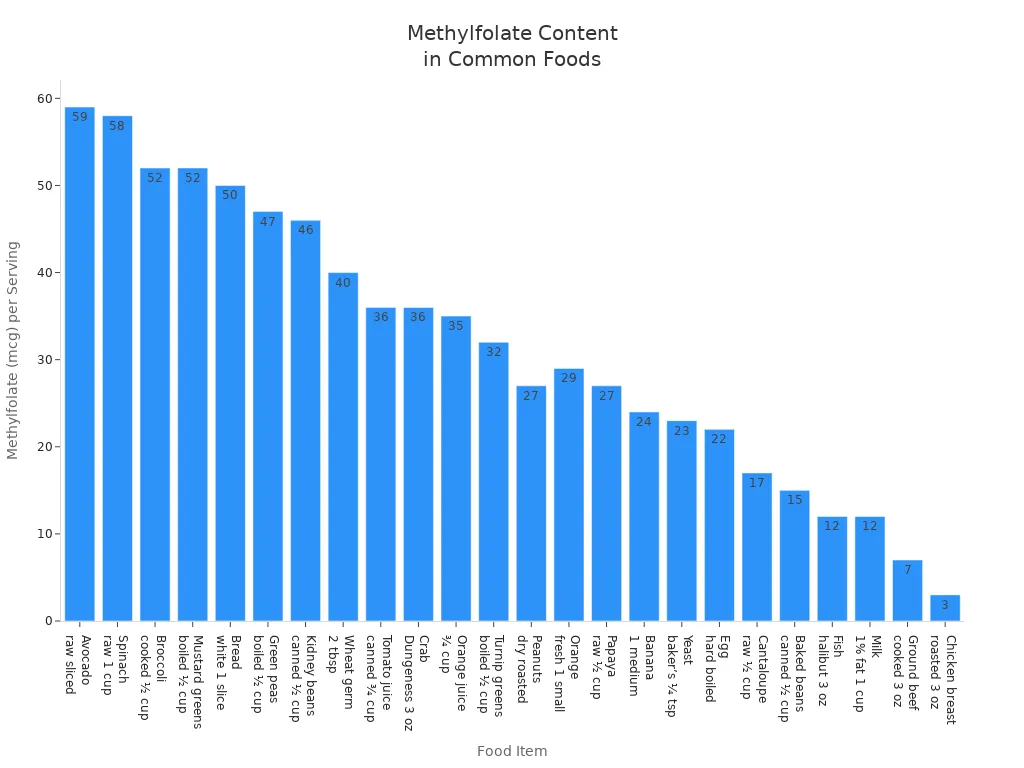
Natural folate from food does not absorb as well as folic acid from supplements or prenatal vitamins. You should combine methylfolate supplementation with vitamin B12 to help your body use folate and avoid masking a B12 deficiency.
When choosing prenatal vitamins or methylfolate supplementation, look for products with strong manufacturing practices, quality assurance, and verified ingredients. High folate intake from supplementation can increase risks, such as immune dysfunction and some cancers. Always check with your doctor before changing your dosage, especially during pregnancy.
You need an individualized methylfolate dosage if you have an MTHFR mutation. Research shows that standard folic acid does not work well for you, especially with the C677T variant. Using 5-MTHF in a dose tailored to your needs helps your body absorb folate and manage homocysteine levels safely. Start with a low dose, monitor your response, and talk with your healthcare provider.
- Personalized plans with the right supplements and healthy habits can improve your mental well-being.
- L-methylfolate, methylcobalamin, and omega-3s support your health.
- Exercise, stress management, and good sleep help you feel your best.
Use this guide to make safe choices and check in with your provider often.
FAQ
What is the best time of day to take methylfolate?
You should take methylfolate in the morning or with lunch. This timing helps your body use the vitamin for energy and focus. Taking it late in the day may cause trouble sleeping.
Can you take methylfolate if you do not have an MTHFR mutation?
Yes, you can take methylfolate even without an MTHFR mutation. Your body uses it easily. Many people choose methylfolate for better absorption and fewer side effects than folic acid.
How long does it take to notice benefits from methylfolate?
You may notice changes in mood or energy within a few days to a few weeks. Your response depends on your health, dosage, and other nutrients. Track your symptoms and talk with your doctor about your progress.
Should you stop taking folic acid if you switch to methylfolate?
You should not take both at the same time unless your doctor says so. Methylfolate replaces folic acid for most people with MTHFR mutations. Always check with your healthcare provider before making changes.
What should you do if you feel side effects from methylfolate?
- Lower your dose or stop taking it.
- Drink plenty of water.
- Contact your healthcare provider for advice.
Most side effects go away when you adjust your dosage.