
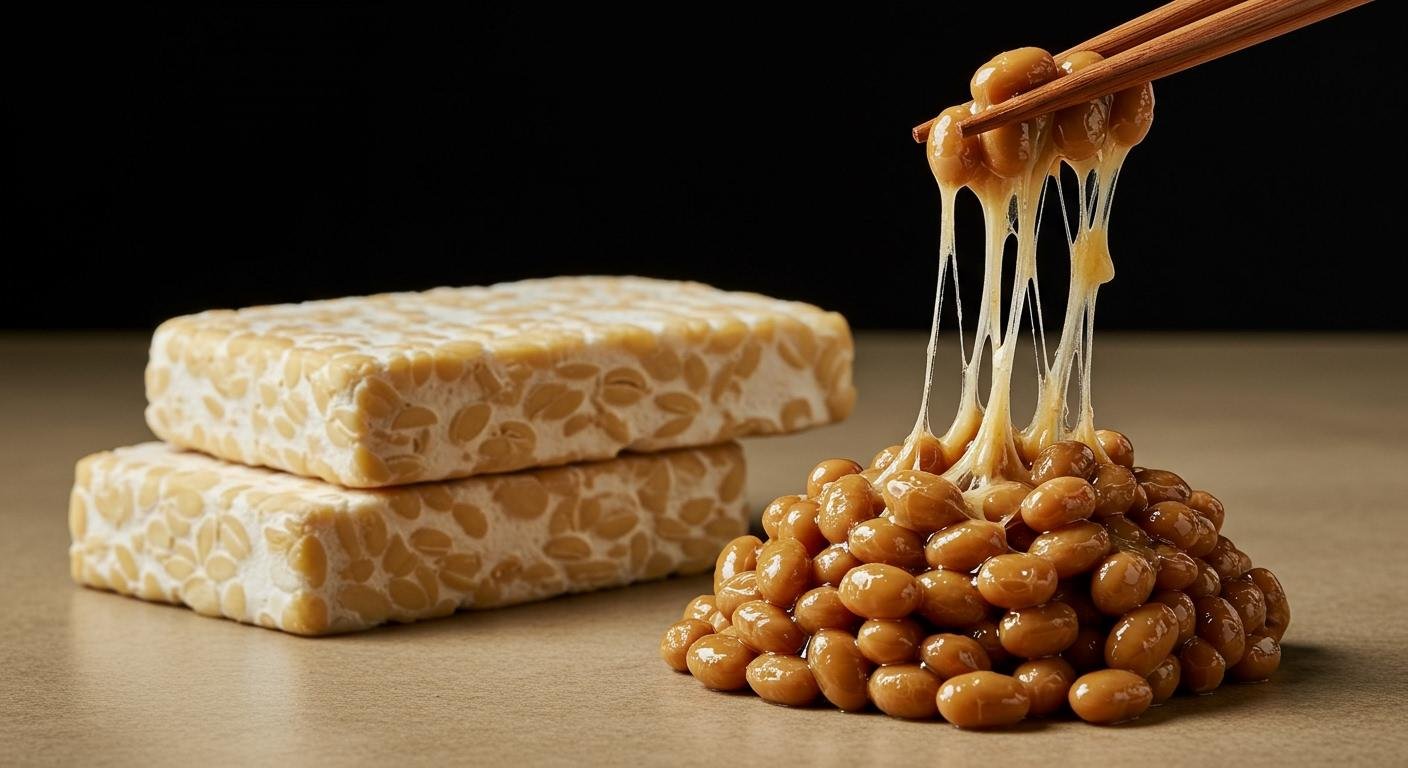
The choice between natto vs tempeh presents a study in contrasts. Natto is a traditional Japanese dish featuring sticky, pungent soybeans. In contrast, tempeh is a firm soy cake from Indonesia, known for its nutty flavor and solid texture. Both soy foods are key players in the global market for fermented soy products, valued at approximately $50 billion. This reflects a growing consumer interest in healthy and diverse food options.
Did You Know? The wider fermented foods market, which includes natto and tempeh, was valued at over $130 billion in 2024. This market is projected to show consistent annual growth.
At a Glance: Natto and Tempeh
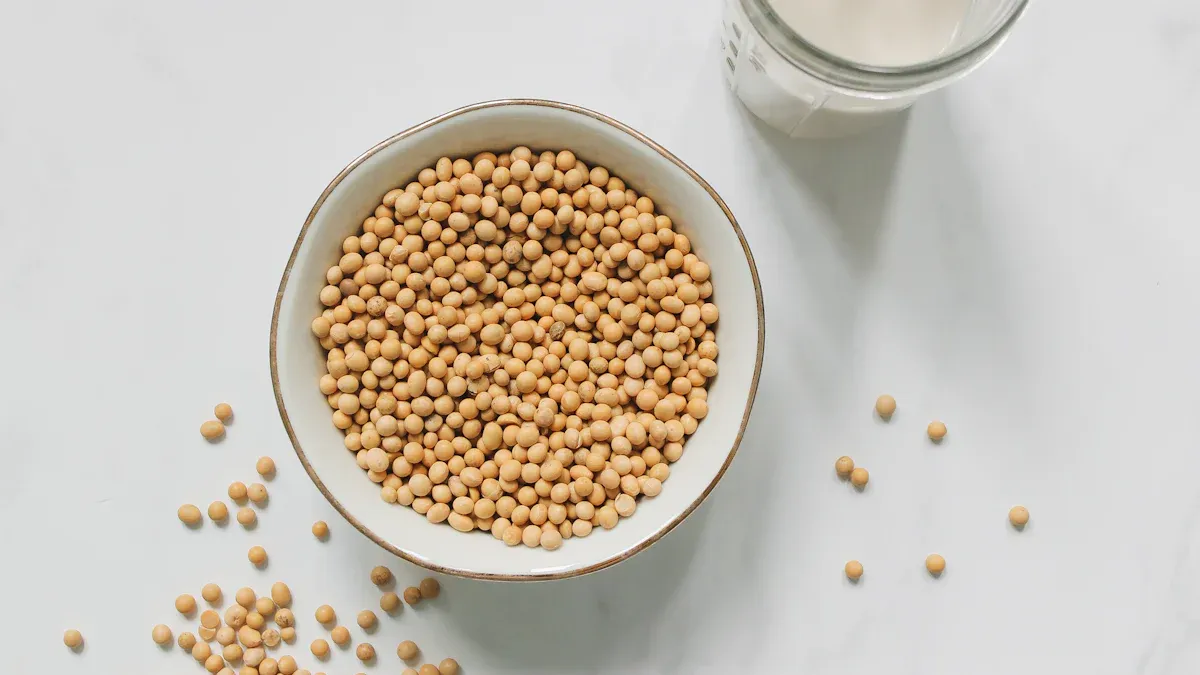
This quick comparison of natto vs tempeh highlights the key distinctions between these two popular fermented soy foods.
Origin and Appearance
Natto is a traditional Japanese dish with a history stretching back centuries. It became popular during Japan’s Heian Period (794-1185). This food consists of whole fermented soybeans, easily recognized by their sticky, stringy coating. The unique fermentation process gives natto its signature appearance.
Tempeh originated on the island of Java in Indonesia. Javanese people perfected the art of making this soy food thousands of years ago. Unlike natto, tempeh is a firm, dense cake. Whole soybeans are bound together by a white mycelium, creating a solid block that can be sliced.
Core Taste and Texture
The flavor and texture profiles of these foods are worlds apart. Natto possesses a strong, pungent, and savory flavor often compared to aged cheese. Its most notable feature is its “neba neba” texture, a Japanese term for its desirable sticky and slimy quality.
Tempeh offers a much milder experience. It has a nutty and earthy flavor that some describe as mushroom-like. The texture is firm, chewy, and never slimy. Because its own flavor is subtle, tempeh is excellent at absorbing marinades and seasonings, making it a versatile soy product.
Primary Kitchen Uses
The different characteristics of natto and tempeh lead to very different culinary uses. Natto is often enjoyed in simple, traditional preparations, while tempeh serves as a durable meat substitute in a wide variety of recipes. These cooked and fermented legumes offer diverse options for any meal.
| Natto | Tempeh |
|---|---|
| Served over rice with soy sauce | Used in stir-fries and salads |
| Mixed into pasta or udon noodles | Made into vegan bacon or burgers |
| Added to miso soup or omelets | Crumbled into tacos or grain bowls |
| Used as a topping for sushi | Grilled as kebabs or in sandwiches |
Natto vs Tempeh: Flavor and Texture
The sensory experience of natto vs tempeh is where these two soy foods diverge most dramatically. One offers a bold, acquired taste, while the other provides a mild, versatile base. Understanding their unique flavor and texture profiles is key to choosing the right one for your next meal.
Comparing the Flavor Profile
Natto possesses a powerful and complex flavor that is often an acquired taste. It is intensely savory, pungent, and has a strong aroma frequently compared to aged cheese. The fermentation process creates specific chemical compounds that define this unique taste. Amines contribute to its stimulating ammonia-like notes, while pyrazines and ketones build its overall flavor profile. Some people even detect subtle nutty or coffee-like undertones beneath the initial pungency.
Tempeh, on the other hand, presents a much milder flavor. It is nutty, earthy, and slightly savory. Many describe its taste as mushroom-like, a quality that can become more pronounced as the tempeh ages or during cooking. This fermented soy food has a robust umami character without being overpowering.
Because its own flavor is subtle, tempeh is a fantastic canvas for other ingredients. It readily absorbs marinades, spices, and sauces, making it a versatile component in many dishes.
The Unique Texture of Natto
The most distinctive characteristic of natto is its texture. The fermented soybeans are coated in a sticky, slimy, and stringy substance known in Japanese as “neba-neba.” This silky stickiness is caused by a form of glutamic acid produced during fermentation. This substance is a crucial indicator of high-quality natto. Many people stir the natto vigorously before eating. This action helps the mucilage strands stretch and interlink, creating even more of the signature “strings of goo” that define the natto experience.
The Firm Texture of Tempeh
Tempeh offers a completely different textural experience. It is a dense, firm cake of whole soybeans. The soy food gets its solid form from the Rhizopus oligosporus mold used in its fermentation. This mold produces a dense, white, cottony mycelium that grows around and through the soybeans, binding them into a compact block that you can slice, cube, or crumble. The final product has a satisfyingly firm and chewy texture.
The texture of tempeh can vary based on its preparation.
- Fresh, unpasteurized tempeh is often described as having a superior creamy and meaty texture.
- It should always feel firm to the touch. A mushy texture can indicate the tempeh is past its prime.
Unlike natto, tempeh is never slimy. Its dry and solid form makes it an excellent meat substitute that holds its shape well during cooking.
Cooking with Natto and Tempeh
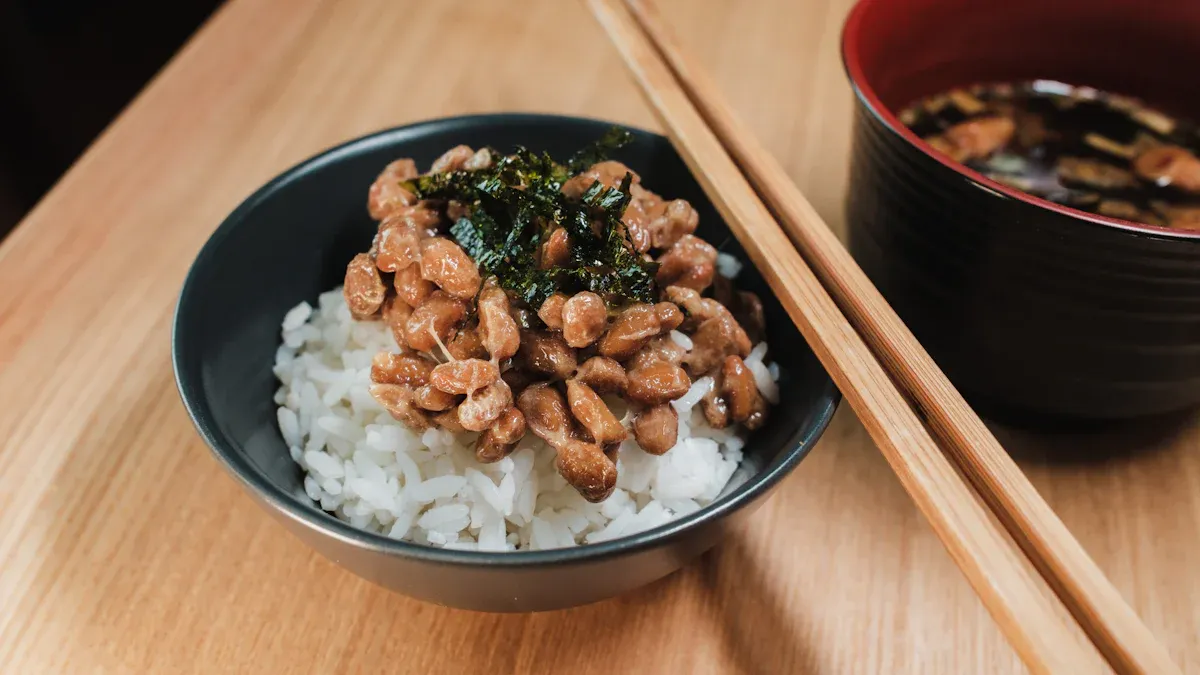
The distinct properties of natto and tempeh lead to very different culinary uses. Natto is often enjoyed with minimal preparation to preserve its unique character. Tempeh, however, serves as a versatile base that benefits from marinades and various cooking methods. Understanding how to prepare each soy food is key to enjoying them.
How to Use Natto
Preparing natto is simple and focuses on enhancing its existing flavors. The most traditional way to eat natto is over a bowl of steamed rice.
- Most people stir the natto vigorously before eating. This action creates a light, foamy texture and is believed to bring out more umami flavor.
- It often comes with packets of dashi (broth) and karashi (spicy mustard), which are mixed in.
- Common additions include chopped green onions, a raw egg yolk, or kimchi.
Beyond rice bowls, natto can be added to miso soup, mixed into pasta dishes, or used as a topping for chilled tofu. These simple preparations highlight the unique taste and texture of the fermented soybeans.
How to Cook Tempeh
Tempeh has a mild, nutty flavor that makes it an excellent canvas for seasonings. Marinades are a popular way to infuse the tempeh with flavor before cooking. Strong marinades work best. A simple and effective marinade combines soy sauce, maple syrup, balsamic vinegar, and garlic powder. Other popular options include:
- Smoky Maple: Uses liquid smoke and tamari for a “bacon” flavor.
- Korean BBQ: A sweet and salty mix with soy sauce, ginger, and garlic.
- Tandoori: A curry-flavored marinade using non-dairy yogurt and spices.
These marinades transform the tempeh, making it a flavorful protein for any dish.
Steaming Tempeh for Better Taste
Some people find tempeh has a slightly bitter taste. Steaming the tempeh before marinating or cooking is a simple step that can solve this issue.
Pro Tip: Steaming tempeh for 10-15 minutes softens its texture and removes bitterness. This also helps it act like a sponge, allowing it to better absorb the flavors from sauces and marinades.
This extra step is highly recommended for anyone new to this soy food or for those who want the best possible flavor.
Popular Cooking Methods
Tempeh’s firm texture holds up well to many cooking methods, making it a fantastic meat substitute.
- Crumbled: You can crumble tempeh into chickpea-sized pieces and pan-fry it until brown. This makes a great substitute for ground meat in tacos or pasta sauces.
- Pan-Fried: Slicing tempeh into strips and pan-frying for 3-4 minutes per side creates a golden-brown crust. This is perfect for sandwiches and salads.
- Baked: For an easy, hands-off method, you can bake marinated tempeh at 400°F (205°C) for about 20 minutes until firm and browned.
These versatile culinary uses make tempeh a staple in many plant-based kitchens.
Natto and Tempeh Nutrition
Both natto and tempeh offer impressive nutritional benefits, making them healthy additions to any diet. As excellent sources of plant-based protein, these fermented soy foods provide unique advantages that stem from their specific fermentation processes. Their nutritional profiles, however, are quite different, making the choice between natto vs tempeh a matter of specific health goals.
Protein and Fiber Comparison
Tempeh stands out as a high-protein meat substitute. It packs a significant amount of protein, making it a favorite for those seeking a hearty plant-based option. Both soy foods are also rich in fiber. A 100g serving of tempeh contains about 8.5g of dietary fiber, which supports digestive health. In comparison, a 100g serving of natto provides 5.9g of fiber. This high fiber content in both foods contributes to feelings of fullness and supports a healthy gut. The protein and fiber in tempeh make it a great substitute for meat.
Vitamin K2 and Nattokinase
Natto provides some extraordinary health benefits not found in many other foods. It is one of the richest plant sources of Vitamin K2. A single tablespoon of natto can contain over 150 micrograms (mcg) of this vitamin, with some reports showing up to 1000 mcg per 100 grams. This nutrient is crucial for bone health and cardiovascular health.
Did You Know? Natto contains a unique enzyme called nattokinase, produced during its fermentation. This enzyme offers powerful health benefits.
Animal studies have long supported the ability of nattokinase to dissolve blood clots. Some human studies also suggest it may help lower blood pressure, further supporting heart health.
Probiotics and Gut Health
The fermentation process gives both natto and tempeh powerful benefits for gut health. Natto is a fantastic source of the probiotic Bacillus subtilis. Consuming natto helps improve the intestinal environment and promotes the growth of other beneficial bacteria like Bifidobacterium. These probiotics offer many health benefits.
Tempeh also supports gut health. The fermentation of the soybeans breaks down compounds that can interfere with digestion, making its nutrients easier to absorb. Tempeh contains prebiotics, a type of fiber that feeds good gut bacteria. Unpasteurized tempeh can also contain probiotics like Lactobacillus, which contribute to a healthy gut microbiome. These nutritional benefits make both soy products excellent for overall health.
The choice in the natto vs tempeh debate depends on your health goals and flavor preferences. Both fermented soybeans offer unique benefits. Natto provides exceptional health benefits from its fermentation process. Tempeh is a versatile plant-based protein substitute.
Choose natto for its potent Vitamin K2 and probiotic health benefits if you enjoy a strong, acquired flavor. Choose tempeh for a mild, nutty soy food that works as a high-protein meat substitute in many recipes.
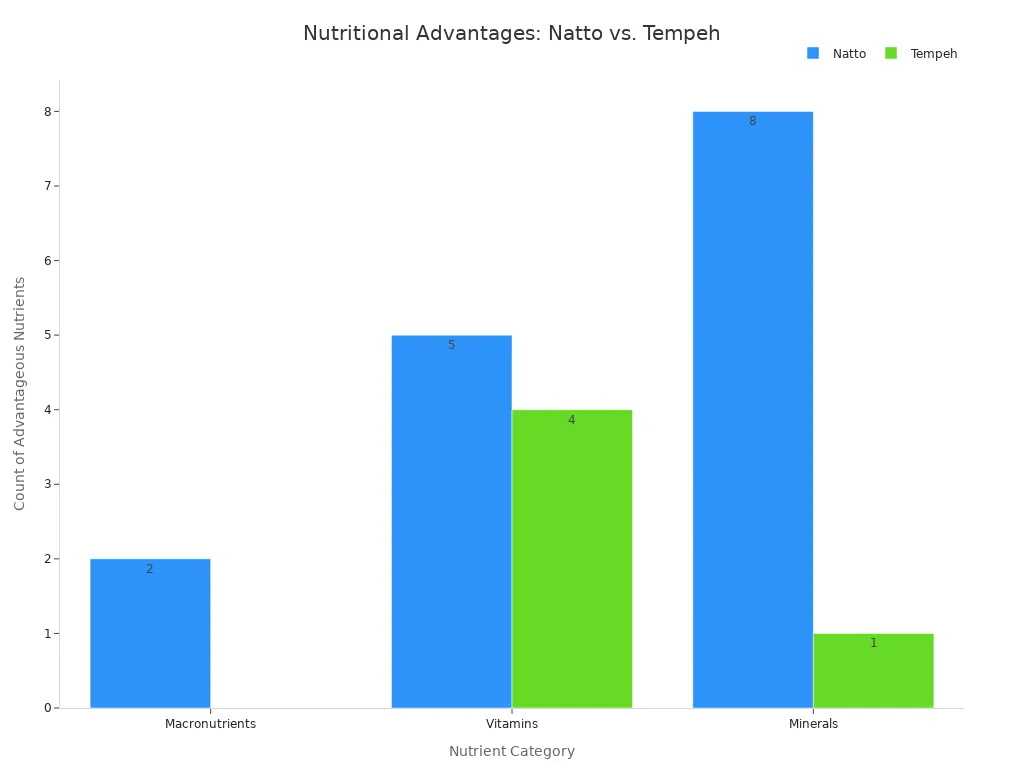
The nutritional trade-offs between these soy foods are clear. Natto offers more advantages in minerals and certain vitamins.
| Nutrient Category | Natto Advantage | Tempeh Advantage |
|---|---|---|
| Macronutrients | More carbs and fiber | N/A |
| Vitamins | B1, C, E, K, Choline | B2, B3, B6, B9 |
| Minerals | Calcium, Copper, Iron | Phosphorus |
Exploring natto and tempeh can greatly enhance your health and your meals.
FAQ
Can you eat natto and tempeh raw?
People often eat natto raw to preserve its beneficial probiotics. Tempeh, however, requires cooking before consumption. Steaming or frying tempeh makes the soy food safe to eat and improves its flavor. Eating raw tempeh is not recommended for safety and taste reasons.
Are natto and tempeh gluten-free?
Yes, both natto and tempeh are naturally gluten-free soy products. Their basic ingredients are just soy and a fermentation culture. Some brands may add other ingredients, so it is always wise to check the product label for hidden gluten sources.
Which is a better meat substitute?
Tempeh is the superior meat substitute. Its firm texture holds its shape well during cooking, making it a versatile substitute in many dishes. The strong, acquired taste of natto makes it a less common choice for a direct meat replacement in most recipes.
Where can I find these soy foods?
You can find both natto and tempeh in the refrigerated section of most health food stores and Asian markets. Look for them near other soy products like tofu.