
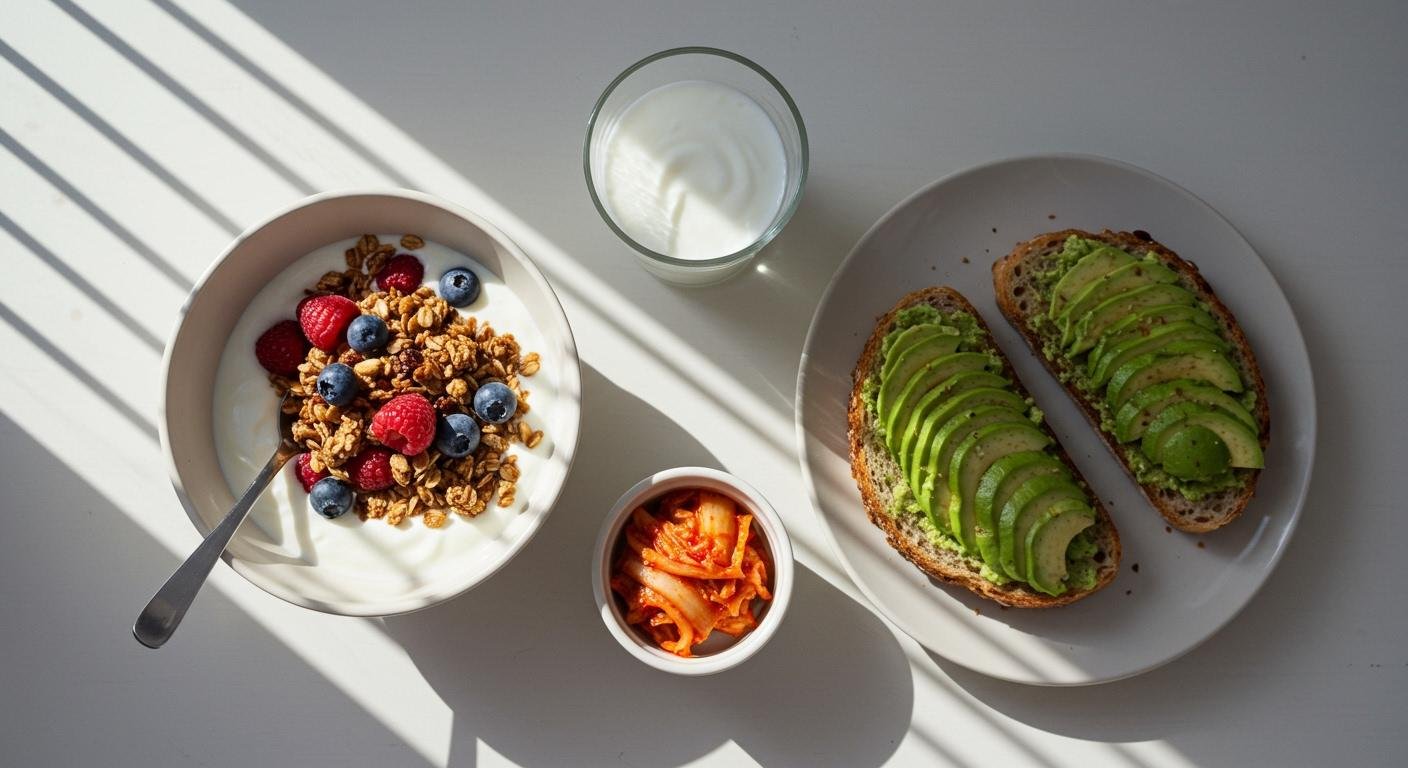
Nearly 1 in 7 Americans experiences weekly bloating. You can support your gut with a simple morning habit. The best way involves starting your day with a small portion of gentle fermented foods.
Morning Tip: Eat a spoonful of yogurt, kefir, or sauerkraut on an empty stomach.
This practice helps improve your digestion. Protein-rich options also boost dopamine, which can reduce cravings and sustain your energy throughout the day. You will find simple and quick methods for a gut-healthy start.
Starting Your Day with Fermented Foods
You can easily begin starting your day with fermented foods. Many simple and delicious breakfast options are available. You just need to find the ones that fit your routine and taste preferences. Let’s explore some of the most accessible choices.
Kefir and Yogurt
Kefir and yogurt are excellent starting points. These fermented dairy snacks are creamy, mild, and packed with beneficial bacteria. Many people believe eating probiotics on an empty stomach is best. However, science suggests a different approach. An empty stomach is highly acidic. This environment can harm the live cultures. Eating a small meal first raises your stomach’s pH. This creates a friendlier environment for probiotics to survive and thrive.
Kefir often contains more probiotic strains and a higher number of Colony Forming Units (CFUs) than yogurt. This makes it a powerhouse for your gut.
| Product | Live and Active Cultures | CFUs (Colony Forming Units) |
|---|---|---|
| Kefir | Around 12 | 15–30 billion per serving |
| Yogurt | 2–5 | Around 6 billion per serving |
Some probiotic strains, like Bifidobacterium longum and Lactobacillus rhamnosus, are quite resilient. Studies show they can be effective whether you take them before or after a meal.
Simple Ways to Enjoy Them:
- Blend 1 cup of plain kefir or yogurt into your morning smoothie.
- Pour kefir over a bowl of granola and fresh berries.
- Stir a spoonful of yogurt into your oatmeal after cooking.
Kombucha
Kombucha is a fermented tea with a fizzy, slightly sweet-and-sour taste. It can be a refreshing morning drink. You should be mindful of its contents.
- Caffeine: An 8-ounce serving typically has 15-25 mg of caffeine.
- Sugar: Sugar content varies, but many brands offer low-sugar versions with just a few grams per serving.
Miso, Sauerkraut, and Kimchi
These savory fermented foods offer a different way to start your day. Miso, sauerkraut, and kimchi are high in salt. Salt is essential for the fermentation process. It preserves the vegetables and encourages good bacteria to grow. If you monitor your sodium intake, choose lighter, white-style misos. They are fermented for less time and contain less salt.
Kimchi and sauerkraut are both made from fermented cabbage, but their preparation differs.
| Feature | Kimchi | Sauerkraut |
|---|---|---|
| Ingredients | Cabbage plus a mix of seasonings like chili, garlic, and ginger. | Primarily cabbage and salt. |
| Fermentation | A shorter fermentation process, often just a few days. | A longer fermentation process, lasting for weeks. |
Simple Ways to Enjoy Them:
- Stir a teaspoon of miso paste into a cup of warm water for a simple, savory broth.
- Add a spoonful of sauerkraut or kimchi to your scrambled eggs.
- Top a slice of avocado toast with a forkful of kimchi.
Key Health Benefits of Fermented Foods
Adding fermented foods to your diet offers powerful advantages for your well-being. The health benefits of fermented foods extend from your gut to your brain.
- Improved Immune Function: A Stanford University study found that a diet rich in fermented foods increased microbiome diversity. It also lowered levels of inflammatory markers in the body. This suggests these foods can help regulate your immune system.
- Enhanced Metabolic Health: Gut bacteria ferment fiber and produce short-chain fatty acids (SCFAs). These SCFAs help regulate your body’s glucose and cholesterol levels. They play a key role in protecting you against metabolic diseases.
- Better Mood and Mental Clarity: Your gut and brain are constantly communicating. This is called the gut-brain axis. A healthy gut microbiome can positively influence your mood. Studies show that certain probiotics may reduce feelings of anxiety and depression. Other research links a diverse microbiome to better resilience against stress.
Incorporating Fermented Foods: Simple Meal Ideas
Knowing which fermented foods to eat is the first step. Now you can learn how to build simple, delicious meals around them. Incorporating fermented foods into your breakfast routine does not need to be complicated. These meal templates are quick, flexible, and packed with gut-friendly benefits.
Probiotic Smoothies
A smoothie is one of the fastest ways to get a nutrient-dense breakfast. You can easily add kefir or yogurt to create a powerful probiotic drink. Certain fruits can also help the good bacteria survive.
The 5-Minute Smoothie Template
- Probiotic Base: Start with 1 cup of plain kefir or yogurt.
- Fruit Power: Add 1/2 cup of fruit. Studies show some fruits are excellent for probiotic viability.
- Prebiotic Boost: Include a source of prebiotics. Prebiotics are fibers that feed your good gut bacteria. Good choices include a handful of spinach, a tablespoon of oats, or half a banana.
Research shows that certain fruit juices help maintain high counts of live cultures. This makes them great additions to your smoothie.
| Fruit Base | Probiotic Viability Outcome |
|---|---|
| Sweet Orange | Maintained excellent viable cell counts after 4 weeks. |
| Pineapple | Showed 100% viability for certain strains after 28 days. |
| Mango | Kept probiotic counts high for over 4 weeks in cold storage. |
You can also get creative. Some people enjoy adding a spoonful of red cabbage sauerkraut to a high-protein smoothie for an extra boost.
Savory Miso Bowls
If you prefer a savory start, a miso bowl is a warm and comforting option. Miso is a fermented paste that makes a flavorful broth. To protect its beneficial bacteria, you must handle it correctly.
Important Tip: High heat can destroy the live cultures in miso. Always mix your miso paste into warm water, not boiling water. Keep the temperature below 115°F (46°C). If adding it to soup, remove the pot from the heat for a few minutes before stirring in the miso.
You can build a simple breakfast bowl using miso as your base. This is a great way of incorporating fermented foods into a savory meal.
- Simple Miso Broth: Stir 1 teaspoon of white miso into a cup of warm water.
- Add Protein: Drop in some soft tofu or a soft-boiled egg.
- Include Vegetables: Add ingredients like sliced mushrooms, shredded carrots, or bok choy.
- Top with Flavor: Garnish with fresh scallions or sesame seeds.
You can also add other fermented foods to savory breakfasts. Try adding a spoonful of kimchi to scrambled eggs or topping avocado toast with sauerkraut. These are excellent healthy snack options for any time of day.
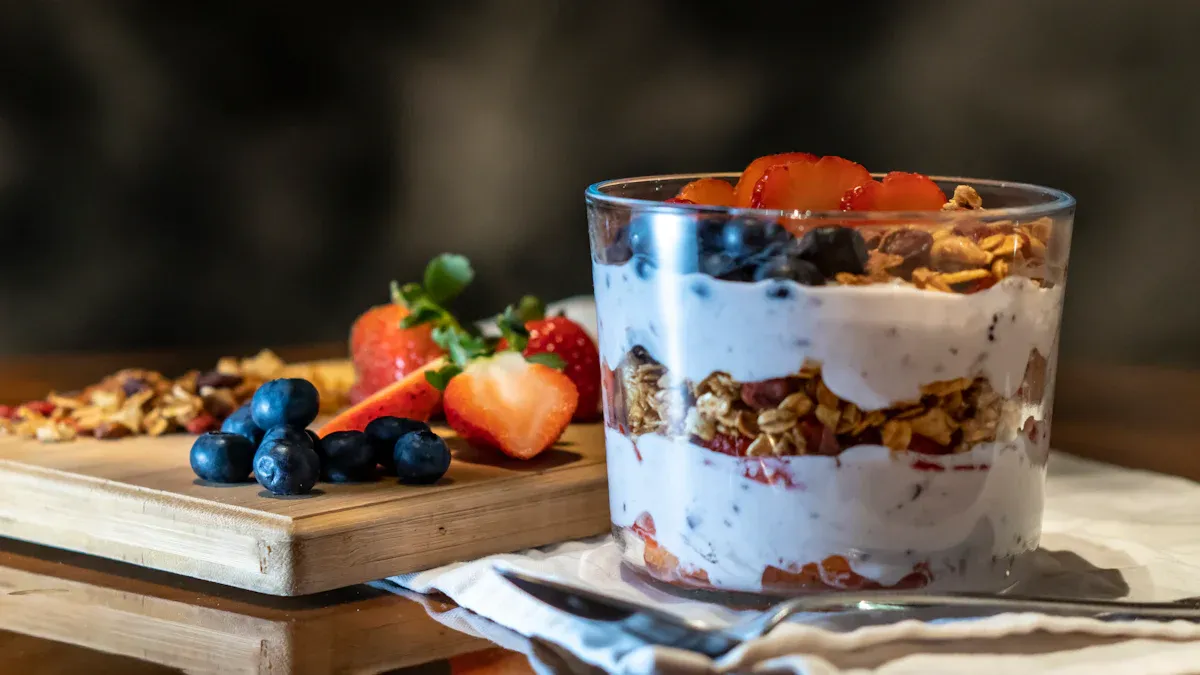
Quick Yogurt Parfaits
A yogurt parfait is a classic breakfast that you can assemble in minutes. It layers creamy yogurt with crunchy toppings and fresh fruit. This combination provides protein, fiber, and beneficial bacteria.
The Perfect Parfait Formula
- Layer 1 (The Base): Start with a few spoonfuls of plain yogurt or kefir.
- Layer 2 (The Crunch): Add a sprinkle of grains or nuts. Toasted oats and barley flakes offer a satisfying crunch. Almonds, walnuts, and pumpkin seeds provide healthy fats and fiber.
- Layer 3 (The Fruit): Top with fresh berries or sliced banana.
- Repeat: Continue layering until your glass or bowl is full.
For the best texture and nutrition, focus on these key ingredients:
- Grains: Toasted oats, low-sugar granola, barley flakes.
- Nuts and Seeds: Almonds, walnuts, hazelnuts, ground flax seeds, hemp hearts.
- Fruit: Berries, bananas, peaches, or kiwi.
This simple method gives you a balanced and satisfying breakfast. It is a fantastic way to enjoy fermented foods without any extra effort.
Tips for Adding Fermented Foods Safely
Adding fermented foods to your diet is a great step for your gut health. You can make this transition smooth and comfortable. Following a few simple tips will help your body adjust without any trouble.
Start with Small Portions
Your gut needs time to get used to new bacteria. You should begin with a very small amount. For potent foods like kimchi or sauerkraut, a single forkful (about ¼ cup or less) with a meal is a perfect start. You can gradually increase your intake over a few weeks. This slow approach helps you avoid uncomfortable side effects.
Pair with Fiber-Rich Foods
You can boost the benefits of probiotics by pairing them with prebiotics. Prebiotics are fibers that feed the good bacteria in your gut. Scientists call this powerful combination a ‘synbiotic’. This pairing helps the probiotics survive and work more effectively.
“Prebiotics and probiotics work together. For the biggest benefit, pair them up.” – Kristen Halm, MD
You can easily create a synbiotic breakfast. Try these high-fiber additions to your morning yogurt or kefir:
- Oatmeal: A classic fiber-rich base. Top it with berries and nuts.
- Seeds: Add a tablespoon of chia seeds or ground flaxseeds to a smoothie.
- Berries: Raspberries and blackberries are packed with fiber.
- Nuts: Sprinkle sliced almonds or walnuts on a yogurt parfait.
- Granola: Choose a low-sugar granola made with whole grains and nuts.
Listen to Your Body
Pay close attention to how you feel after eating new fermented foods. Your body will give you signals. Some initial gas or bloating can be normal as your gut microbiome adjusts. However, you should reduce your portion size if you experience significant discomfort.
Watch for these common signs of digestive distress:
- Gas and bloating
- Diarrhea or constipation
- Stomach cramping or pain
Sometimes, your body may show non-digestive signs. Be aware of other reactions, such as dizziness or a racing heart. If any symptoms feel severe or persist, it is best to stop and consult a healthcare professional. Your well-being is the top priority.
You can easily add fermented foods to your morning routine. The best way to begin is with a small portion of a gentle option. Try yogurt or kefir paired with fiber-rich foods like berries or oats. Building this healthy habit is simple and does not require major lifestyle changes. You can take the first step toward better gut health today.
Your Action Step: Choose one meal idea from this guide. Try the Probiotic Smoothie or a Quick Yogurt Parfait for breakfast tomorrow. Your gut will thank you. 🚀
FAQ
Can I eat fermented foods every day?
Yes, you can eat fermented foods daily. Most people find this habit safe and beneficial. Remember to start with small portions. Pay attention to how your body feels as you make it a regular part of your diet.
What if I don’t like the taste?
You have many options. If you dislike kimchi’s spiciness, try mild sauerkraut. You can also mix plain yogurt or kefir into a smoothie with fruit. This simple trick helps mask the tangy flavor. Experiment to find a food you enjoy.
Will fermented foods make me bloated?
You might notice some temporary gas or bloating. This is often normal as your gut microbiome adjusts. Start with a very small portion, like one spoonful. This helps minimize discomfort while your body gets used to the new bacteria.
Are homemade fermented foods better?
Homemade foods give you full control over ingredients like salt and sugar. However, many store-bought options are excellent. Always check the label.
Label Tip: Look for phrases like “live and active cultures” and choose products with low added sugar.