
If you want to know which fruit has fewer calories, Comparing Calories shows that apples usually have about 95 calories for a medium fruit, while bananas have around 105. This small difference can matter if you focus on healthy eating or weight control. Look at the nutrition comparison table below to see how carbohydrates can vary:
| Fruit | Average Calories | Carbohydrates (g) |
|---|---|---|
| Apple | 95 | 21 |
| Banana | 105 | 24 |
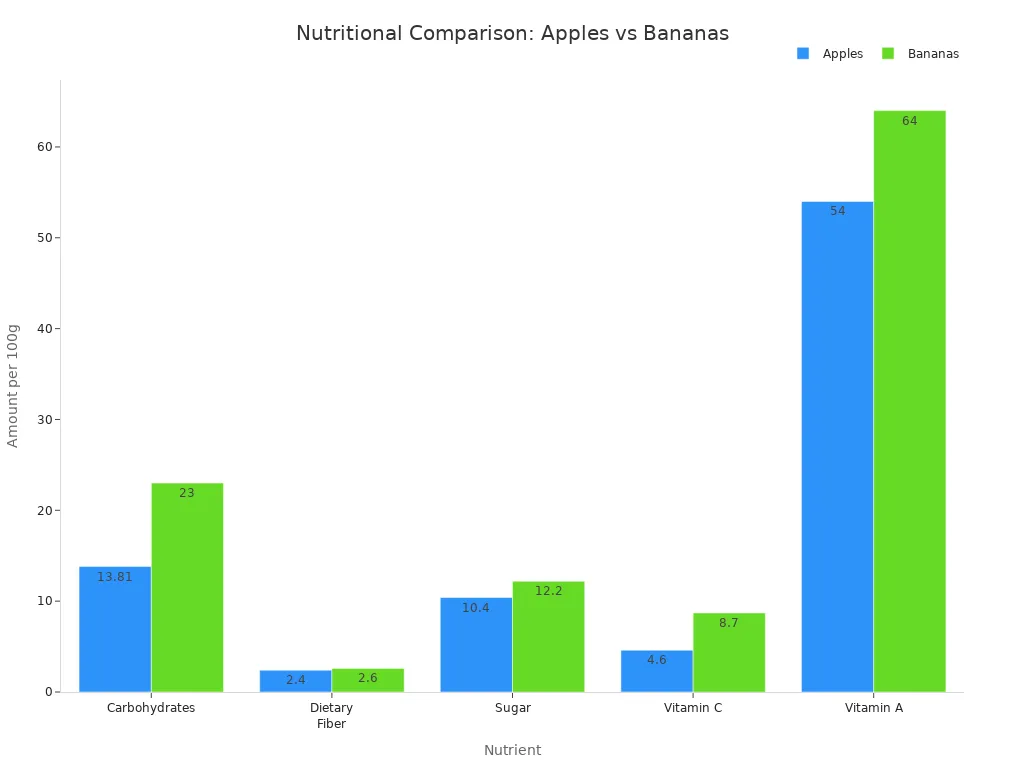
You can also check the nutritional differences in this chart, which highlights fiber, sugar, and vitamins.
By understanding this nutrition, you can make better choices for your diet and enjoy the benefits of both apples and bananas.
Comparing Calories
Calories in Apples
When you look at comparing calories, apples stand out as a lower-calorie fruit. A medium apple usually contains about 95 calories. If you measure by weight, apples have around 52 calories per 100 grams. The calorie content changes with the size and preparation of the apple. For example, a small apple has 77 calories, a medium apple has 104 calories, and a large apple has 126 calories. If you eat one cup of apple slices, you get 65 calories. Dried apples have much more calories because the water is removed, making them more concentrated.
| Size/Preparation | Calories |
|---|---|
| 100 g | 52 |
| Small Apple (165g) | 77 |
| Medium Apple (200g) | 104 |
| Large Apple (242g) | 126 |
| One Cup Apple Slices | 65 |
| Dried Apple (100g) | 200 |
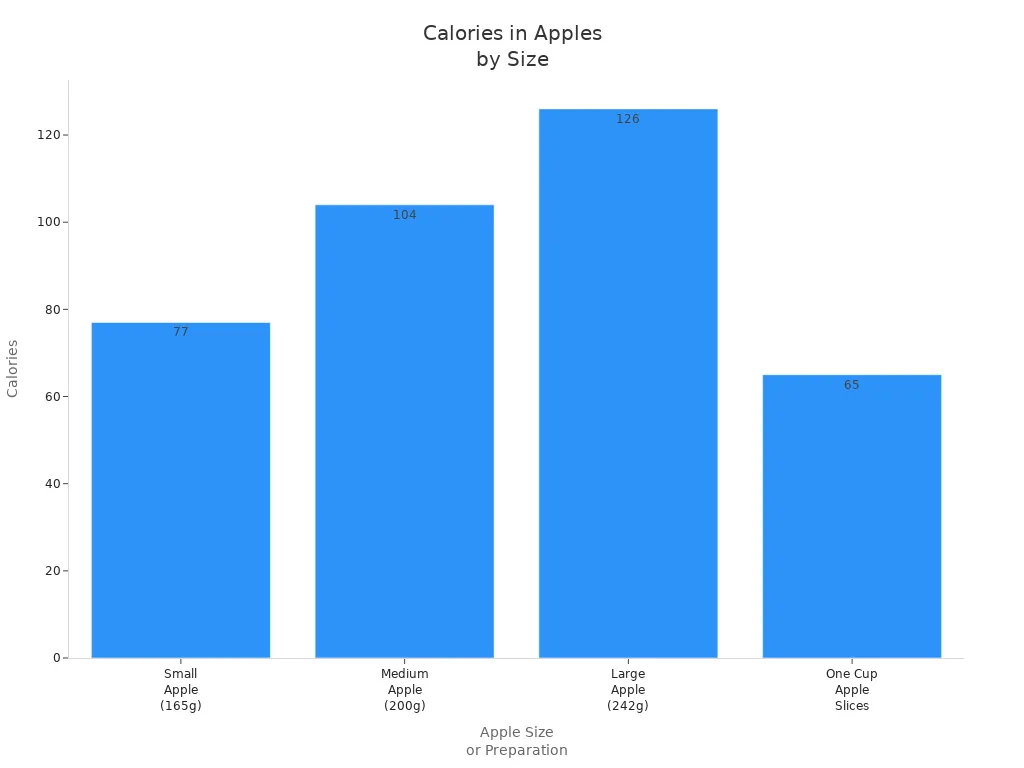
You can see that apples give you flexibility in portion size and preparation. If you want to keep your calorie intake low, choose fresh apples instead of dried or baked ones.
Calories in Bananas
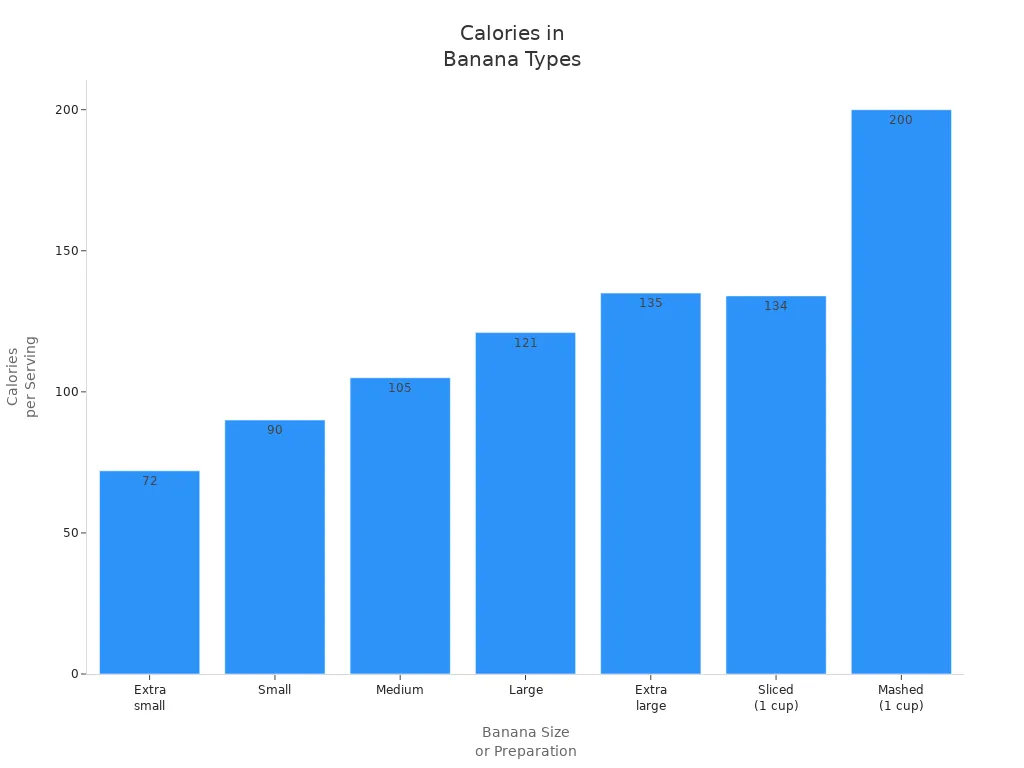
Bananas have a slightly higher calorie count than apples. A medium banana contains about 105 calories. If you measure by weight, bananas have about 89 calories per 100 grams. The calorie content also changes with the size and preparation of the banana. An extra small banana has 72 calories, a small banana has 90 calories, and a large banana has 121 calories. One cup of sliced banana gives you 134 calories, while one cup of mashed banana has 200 calories.
| Banana Size | Weight (grams) | Calories |
|---|---|---|
| Extra small | 81 | 72 |
| Small | 101 | 90 |
| Medium | 118 | 105 |
| Large | 136 | 121 |
| Extra large | 152 | 135 |
| Sliced (1 cup) | 150 | 134 |
| Mashed (1 cup) | 225 | 200 |
The calorie content of bananas can change with ripeness. As bananas ripen, starch turns into sugar. Slightly ripe bananas have a bit more calories than ripe or overripe bananas, but the difference is small. Cooking or drying bananas also increases their calorie content.
Apple vs Banana: Which Has Fewer Calories?
When comparing calories, apples are lower in calories than bananas. If you eat a medium apple, you get about 95 calories. A medium banana gives you about 105 calories. If you look at calories per 100 grams, apples have 52 calories, while bananas have 89 calories. This means apples are a better choice if you want to eat fewer calories.
| Fruit | Serving Size | Calories per Serving | Calories per 100g |
|---|---|---|---|
| Apples | 1 cup, quartered | 65 | 64 |
| Bananas | 1 cup, mashed | 200 | 92 |
Tip: If you want to control your calorie intake, choose apples more often. Apples also give you more fiber, which helps you feel full.
Here is a quick list to help you remember:
- Apples are lower in calories compared to bananas.
- Apples provide more fiber than bananas.
- Bananas have more calories per serving and per 100 grams.
When you focus on comparing calories, apples help you keep your calorie count lower. Bananas give you more energy, but they add more calories to your diet. You can choose apples for weight control or bananas for a quick energy boost.
Nutrition Facts
Apples: Nutrition Overview
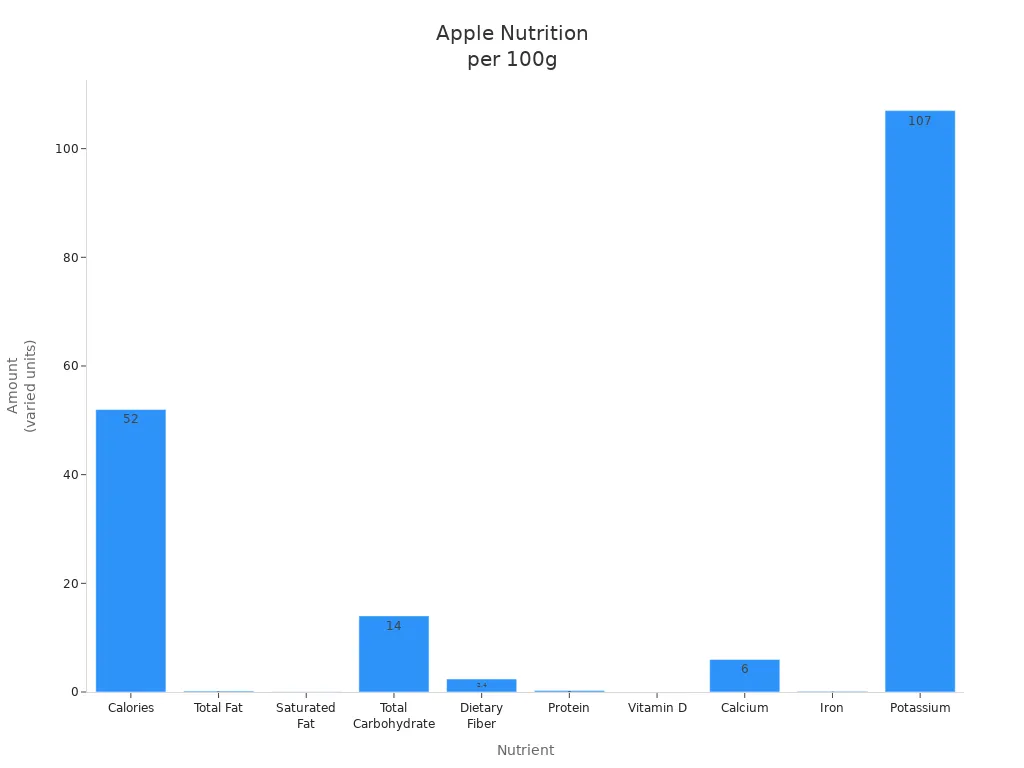
When you look at apples, you see a fruit with a simple but powerful nutrition profile. Every 100 grams of apple gives you about 52 calories. You get 14 grams of carbohydrates, which provide energy for your body. Apples have 2.4 grams of dietary fiber, which helps your digestion and keeps you feeling full. The sugar content stands at 10.4 grams per 100 grams, giving apples their sweet taste.
Apples also offer important vitamins and minerals. You get 4.6 mg of vitamin C, which supports your immune system. Apples contain small amounts of vitamin A, vitamin E, and vitamin K. Potassium, at 107 mg per 100 grams, helps your muscles and nerves work well. You also get a little calcium, iron, magnesium, and copper. These nutrients add to the nutritional value of apples.
Bananas: Nutrition Overview
Bananas give you a different set of nutrition benefits. In every 100 grams, bananas provide about 89 calories. You get 23 grams of carbohydrates, which makes bananas a great source of quick energy. Bananas have 3 grams of dietary fiber, which supports healthy digestion. The sugar content is 12.2 grams per 100 grams, making bananas taste even sweeter than apples.
Bananas stand out for their high potassium content. You get 358 mg of potassium in every 100 grams, which helps control blood pressure and muscle function. Bananas also give you 8.7 mg of vitamin C and 0.4 mg of vitamin B6, which supports your metabolism. You find small amounts of calcium, iron, magnesium, phosphorus, and zinc. These nutrients boost the nutritional value and ingredients of bananas.
Side-by-Side Comparison Table
You can compare the nutritional contents of apples and bananas using the table below. This table shows the nutrition profiles per 100 grams for each fruit.
| Nutrient | Apple (per 100g) | Banana (per 100g) |
|---|---|---|
| Calories | 52 | 89 |
| Carbohydrates | 13.8g | 22.8g |
| Dietary Fiber | 2.4g | 2.6g |
| Sugar | 10.4g | 12.2g |
| Vitamin C | 4.6mg | 8.7mg |
| Vitamin A | 3µg | 3µg |
| Vitamin E | 0.18mg | 0.1mg |
| Vitamin K | 2.2µg | 0.5µg |
| Potassium | 107mg | 358mg |
| Thiamin | 0.017mg | 0.031mg |
| Riboflavin | 0.026mg | 0.073mg |
| Niacin | 0.091mg | 0.665mg |
| Pantothenic acid | 0.061mg | 0.334mg |
| Vitamin B6 | 0.041mg | 0.367mg |
| Folate | 3µg | 20µg |
Note: Both apples and bananas offer strong nutritional value. You can choose either fruit to add vitamins, minerals, and fiber to your diet. Each fruit brings unique nutrition profiles, so you get the most benefits when you include both in your meals.
Carbs and Sugar
Carbohydrates in Apples
When you eat an apple, you get a mix of calories and carbs that help fuel your body. Apples have fewer carbohydrates than bananas. In every 100 grams, apples contain about 13.8 grams of carbohydrates. If you eat a typical serving, you get around 17.3 grams of carbs. This makes apples a good choice if you want to watch your calories and carbs. The fiber in apples helps slow down how fast your body absorbs sugars, so you get steady energy.
| Fruit | Carbohydrates per Serving | Carbohydrates per 100g |
|---|---|---|
| Apples | 17.3g | 13.8g |
| Bananas | 34.3g | 22.8g |
Apples give you fewer carbs and sugars per 100g than bananas. This can help you manage your nutrition if you want to keep your blood sugar steady.
Carbohydrates in Bananas
Bananas have more calories and carbs than apples. In every 100 grams, bananas provide about 22.8 grams of carbohydrates. A typical serving of banana gives you 34.3 grams of carbs. Bananas are a great source of quick energy, especially before or after exercise. The higher amount of sugars in bananas means your body can use the energy fast.
If you compare calories and carbs, bananas give you more of both. This makes bananas a good snack when you need a boost.
Sugar Content
Sugars play a big role in how apples and bananas taste and affect your body. Apples have about 9 grams of sugars per serving, while bananas have about 15 grams. The fiber in both fruits helps slow down how fast your body absorbs sugars, but bananas can raise your blood sugar more quickly.
| Fruit | Sugar Content (grams) | Effect on Blood Sugar Levels |
|---|---|---|
| Apples | 9 | Gradually increases blood sugar due to fiber content. |
| Bananas | 15 | Can significantly impact blood sugar; fiber slows absorption. |
You can see that apples have less sugar than bananas. If you want to control your sugar intake, apples may be the better choice. Bananas, with their higher sugars, work well when you need fast energy. Always check the sugars per 100g if you track your nutrition closely.
Fiber Content
Fiber in Apples
You get a good amount of fiber when you eat apples. One serving of apple provides about 3 grams of fiber, which is 11% of your daily value. If you look at dietary fiber per 100g, apples offer 2 grams, or 9% of your daily value. This fiber helps your digestive system work well and keeps you feeling full after meals.
| Fruit | Fiber per Serving | Fiber per 100g |
|---|---|---|
| Apples | 3g (11% DV) | 2g (9% DV) |
| Bananas | 3g (11% DV) | 2g (9% DV) |
Apples contain a special type of fiber called pectin. Pectin acts as a prebiotic, which means it helps good bacteria grow in your gut. This can improve your digestion and support your immune system. You may notice that eating an apple makes you feel satisfied longer. The fiber slows down how quickly your body absorbs sugar, so your energy stays steady.
Tip: If you want to boost your fiber intake, eat the apple with the skin. Most of the fiber is found there.
Fiber in Bananas
Bananas also give you a solid amount of fiber. One serving of banana contains 3 grams of fiber, matching apples for daily value. When you check dietary fiber per 100g, bananas have 2 grams, just like apples. This fiber helps keep your digestive system healthy and supports regular bowel movements.
Bananas offer different types of fiber, such as inulin and resistant starch. These fibers support gut health and help beneficial bacteria grow. Resistant starch in banana is especially helpful for feeding the good bacteria in your intestines. You may find that eating a banana helps you feel full and energized.
| Fruit | Type of Fiber | Health Effects |
|---|---|---|
| Apples | Pectin (prebiotic) | Promotes beneficial bacterial growth in the gut. |
| Bananas | Inulin, Resistant Starch | Supports gut health and beneficial bacteria growth. |
Note: Both apple and banana provide similar amounts of fiber, but the types of fiber differ. You can choose either fruit to support your digestive health.
Vitamins and Minerals
Key Vitamins
You get important vitamins from both apples and bananas. Apples give you vitamin C, which helps your immune system fight off germs. Bananas also provide vitamin C, but they stand out for their vitamin B6 content. Vitamin B6 helps your body use energy from food and supports brain health.
Here is a table that shows the key vitamins in apples and bananas:
| Fruit | Vitamin C (mg) | Vitamin B6 (%) |
|---|---|---|
| Apple | 8.37 | N/A |
| Banana | 11 | 27% |
Bananas have more vitamin C than apples. You also get a good amount of vitamin B6 from bananas, which apples do not provide. If you want to boost your vitamin B6 intake, bananas are a smart choice.
Tip: Eating a mix of apples and bananas helps you get a variety of vitamins for your body.
Important Minerals
Minerals help your body work well every day. Bananas are an excellent source of potassium. Potassium keeps your muscles and nerves working and helps control blood pressure. Bananas also give you magnesium and manganese, which support bone health and energy production.
Apples contain some minerals, but bananas offer more variety. Here is a table that shows the most important minerals found in each fruit:
| Fruit | Minerals Found |
|---|---|
| Apples | Vitamin C (not a mineral) |
| Bananas | Potassium, Magnesium, Manganese |
You get an excellent source of potassium when you eat bananas. This mineral helps your heart and muscles stay strong. Magnesium and manganese in bananas also help your body make energy and keep your bones healthy.
Note: If you want to support your muscles and heart, choose bananas for their minerals.
Health Benefits
Weight Loss
You can support your weight management goals by choosing the right fruit. Both apple and banana offer benefits, but they work in different ways:
- Apple contains about 104 calories and nearly 5 grams of fiber per serving. The high water content helps you feel full, which can prevent overeating. Antioxidants in apple may also help reduce weight gain.
- Banana has 105 calories and 3 grams of fiber. It has a low to medium glycemic index, so your blood sugar rises slowly. Unripe banana is high in resistant starch, which supports gut health and weight management.
A high fiber diet helps you feel satisfied after eating. You may find that apple, with its higher fiber, works better for weight management than banana. Many studies show that fruits high in fiber, like apple, can be more effective for weight management than lower-fiber options. If you want a healthy snack that helps you stay full, apple is a smart choice.
Tip: Eating fruit with fiber, like apple or banana, can help you avoid unhealthy snacks and support your weight management plan.
Energy and Exercise
You need energy for daily activities and exercise. Both fruits can be a healthy snack, but they provide energy in different ways.
| Fruit | Energy Type | Key Nutrients | Benefits for Exercise and Daily Activities |
|---|---|---|---|
| Banana | Quick, easily digestible | Natural sugars, fiber, potassium | Sustained energy, enhances performance and endurance before workouts |
| Apple | Lasting energy | Fiber, antioxidants (flavonoids) | Regulates blood sugar, provides satiety, fights oxidative stress |
Banana gives you quick energy and is rich in potassium, making it a great pre- or post-workout snack. Apple offers lasting energy and helps keep your blood sugar steady. You can choose either fruit as a healthy snack to fuel your day.
Heart Health
You can protect your heart by including apple and banana in your diet. Apple contains polyphenols and soluble fiber, which can lower cholesterol. This helps reduce your risk of heart disease. Banana has flavonols and antioxidants that also help lower cholesterol. Eating apple or banana three to four times a week can improve survival rates for people with high cholesterol. Apple, in particular, may lower the risk of dying from heart disease.
Note: Adding apple and banana to your weekly routine can support your heart and help with weight management.
Special Diets
You may need to follow a special diet for health reasons. Both apple and banana contain carbohydrates, but banana has more sugar and carbs. If you watch your carb intake, apple may fit better in your weight management plan. The glycemic index of banana rises as it ripens, so choose less ripe banana if you want a lower glycemic snack. Both fruits are naturally gluten-free, so you can enjoy them on a gluten-free diet without worry.
- Apple and banana are safe for gluten-free diets.
- You can include both in a balanced diet, but apple may be better for low-carb or diabetic diets.
- Choose either fruit as a healthy snack to support your weight management goals.
Choosing Apples or Bananas
When to Pick Apples
You might want to reach for an apple when you focus on weight management or blood sugar control. Apples have fewer calories and less sugar than bananas. They also give you more antioxidants, which help your body fight inflammation and protect your cells. If you have diabetes or want to keep your blood sugar steady, apples make a smart snack. The fiber in apples slows down how fast your body absorbs sugar, so you feel full longer.
Here are some reasons to choose apples:
- You want to manage your weight.
- You need to control your blood sugar.
- You want more antioxidants in your diet.
- You prefer a crisp, refreshing snack.
- You want a fruit that helps you feel full.
Tip: Eating apples with the skin gives you the most fiber and nutrients.
When to Pick Bananas
Bananas work best when you need quick energy or want to recover after exercise. They have more calories, carbs, and natural sugars than apples. This makes bananas a great choice before or after a workout. Bananas also help your muscles recover because they contain a lot of potassium. If you have digestive issues, bananas can be gentle on your stomach and help you feel better.
You might pick bananas when:
- You need fast energy for sports or busy days.
- You want to help your muscles recover after exercise.
- You have digestive discomfort and want a soothing snack.
- You like a sweet, creamy fruit.
- You want to add more potassium to your diet.
| Goal | Best Fruit Choice |
|---|---|
| Quick Energy | 🍌 Banana |
| Weight Management | 🍏 Apple |
| Blood Sugar Control | 🍏 Apple |
| Muscle Recovery | 🍌 Banana |
| More Antioxidants | 🍏 Apple |
| Digestive Comfort | 🍌 Banana |
Note: You can include both apples and bananas in your meals to enjoy a balance of energy, fiber, and nutrients. Each fruit supports different health goals, so you can choose the one that fits your needs best.
Practical Tips
Adding Apples to Your Diet
You can enjoy apples in many ways throughout your day. This fruit fits easily into snacks and meals, giving you both flavor and nutrition. Try these ideas to get the most out of your apples:
- Eat a whole apple as a quick snack. You get hydration and important nutrients with every bite.
- Slice apples and add them to salads. They bring crunch and a touch of sweetness to your greens.
- Blend apples into smoothies. This boosts the flavor and adds vitamins, especially after exercise.
- Bake apples into oatmeal or muffins. You get a wholesome breakfast or snack with extra fiber.
- Pair apple slices with nut butter or cheese. This creates a balanced snack with protein and healthy fats.
- Sprinkle apple slices with cinnamon for a low-calorie dessert.
Tip: Keep the skin on your apple to get the most fiber and antioxidants.
Adding Bananas to Your Diet
Bananas offer a sweet and creamy taste that works well in many dishes. You can use bananas to fuel your morning or help your body recover after activity. Here are some easy ways to add bananas to your meals:
- Slice bananas onto your morning cereal or oatmeal for extra energy.
- Blend frozen bananas into smoothies for a creamy texture and natural sweetness.
- Add a banana to your post-workout protein shake to help restore energy.
- Freeze bananas and dip them in dark chocolate for a healthy dessert.
- Spread nut butter on banana halves and top with coconut or chocolate chips for a fun snack.
- Mix banana slices into pancake batter or bake them into banana bread for a tasty treat.
Note: Bananas make a great snack before or after exercise because they provide quick energy and help your muscles recover.
You can see clear differences when you compare calories and nutrition in apples and bananas.
- Bananas give you quick energy and lots of potassium, which helps before or after exercise.
- Apples have more fiber and less sugar, so you feel full longer and keep your blood sugar steady.
- Both fruits add important nutrients to your diet.
Choose apple for weight control or banana for fast energy. Try both to enjoy a balanced and healthy routine.
FAQ
Are apples or bananas better for weight loss?
You should pick apples if you want to lose weight. Apples have fewer calories and more fiber than bananas. This helps you feel full longer and eat less during the day.
Can you eat apples and bananas if you have diabetes?
Yes, you can eat both fruits. Apples have less sugar and a lower glycemic index. Bananas have more sugar but also provide fiber. Always check your blood sugar after eating fruit.
Which fruit gives you more energy before exercise?
Bananas give you more quick energy. They have more carbohydrates and natural sugars. You can eat a banana before a workout for a fast energy boost.
Do apples or bananas have more vitamins and minerals?
Bananas have more potassium and vitamin B6. Apples give you more vitamin K and antioxidants. You get the best mix of nutrients when you eat both fruits.
Can you eat apples and bananas every day?
You can eat both fruits daily. They give you important vitamins, minerals, and fiber. Try to include a variety of fruits in your diet for the best health benefits.