

You can support your heart health by making sure you get enough methylfolate. This nutrient helps your body keep homocysteine levels in check, which protects your heart and blood vessels. Studies show that low folate levels are linked to a higher risk of heart disease, while higher folate intake means better heart health for many people.
- Many large studies found that people with more folate in their diets had fewer heart problems.
- Some research suggests too much folic acid may not help, so balance is key.
| Study Type | Key Finding |
|---|---|
| Clinical Trial | Methylfolate helps turn homocysteine into a safer amino acid, lowering the risk of stroke and heart issues. |
| Population Study | A 20% drop in homocysteine can reduce stroke and heart problems by 7%. |
Methylfolate also supports your mood, brain health, and cell growth. You will learn safe ways to use it and get the most out of the Health Benefits of Methylfolate.
What Is Methyl Folate?
Forms and Sources
You may hear about different forms of folate. Methyl folate, also called l-methylfolate, is the active form your body uses right away. Folic acid is a synthetic form found in many supplements and fortified foods. Your body must convert folic acid into l-methylfolate before it can use it. Some people have trouble making this conversion.
Here is a table that shows the main differences between methylfolate and folic acid:
| Aspect | Methylfolate (5-MTHF) | Folic Acid |
|---|---|---|
| Definition | Biologically active form of folate | Synthetic form requiring conversion |
| Form | End product of folate metabolism, found in foods | Synthetic, not found in nature |
| Bioavailability | Highly bioavailable, does not require conversion | Requires enzymatic conversion |
| Function | Supports methylation, neurological, and cardiovascular health | Used in supplements and fortification |
You can get l-methylfolate from many foods. Leafy greens, like spinach and kale, are top sources. About 80% of the folate in these greens is in the l-methylfolate form. Other foods with l-methylfolate include:
- Dark green vegetables
- Liver
- Fermented foods and drinks
- Certain fruits, such as strawberries
Grains like wheat, corn, and rice have low folate levels. This is why many people do not get enough l-methylfolate from their diet.
Role in the Body
Your body needs l-methylfolate for many important jobs. L-methylfolate helps make DNA and supports cell growth. It also plays a key role in methylation, a process that affects your heart, brain, and mood. L-methylfolate is the form your body can use right away, so it works faster than folic acid.
When you eat foods with folate, your body changes it into l-methylfolate in the liver. Some people have a genetic change that makes this process hard. If you have this change, you may need more l-methylfolate from food or supplements.
L-methylfolate is easy for your body to absorb. It crosses cell walls and helps with many chemical reactions. These reactions keep your heart healthy and support your brain.
Tip: Eating more leafy greens and fruits can help you get enough l-methylfolate for your body’s needs.
Health Benefits of Methylfolate

Heart Health
You can protect your heart by understanding the health benefits of methylfolate. This nutrient helps your body lower homocysteine, an amino acid that can damage blood vessels if it builds up. High homocysteine levels increase your risk for heart disease and stroke. Methylfolate supports the conversion of homocysteine into methionine, a safer amino acid. This process is especially important for people with certain genetic changes, like MTHFR polymorphisms, which make it hard to use regular folate.
Note: Getting enough l-methylfolate can help you maintain healthy blood vessels and reduce your risk of heart problems.
Recent studies show that taking methylfolate for three months can lower homocysteine in people with diabetes. The table below shows how methylfolate works in different situations:
| Study Focus | Key Finding |
|---|---|
| Diabetes Patients | Three months of methylfolate supplements lowered homocysteine levels. |
| Genetic Variations | Methylfolate helps people with MTHFR polymorphisms convert homocysteine to methionine. |
| Gene Differences | People with MTHFR 677CT may benefit more from folinic acid, but l-methylfolate still helps many. |
You can see that the health benefits of methylfolate go beyond just lowering homocysteine. It also supports your overall cardiovascular system. Eating foods rich in folate or taking l-methylfolate supplements can help you keep your heart strong.
Mental Health and Mood
The health benefits of methylfolate also include support for your mental health and mood. Your brain needs l-methylfolate to make important chemicals called neurotransmitters. These include serotonin, dopamine, and norepinephrine. They help control your mood and emotions.
Many people with low folate levels have trouble with mood and may not respond well to antidepressants. Adding l-methylfolate to your routine can help you tackle depression symptoms and improve your response to treatment. Clinical trials show that combining methylfolate with antidepressants leads to better mood and faster improvement. You may notice changes as early as four weeks after starting this combination.
Tip: If you struggle with mood or are treating depression, talk to your doctor about the health benefits of methylfolate.
L-methylfolate is the only form of folate that crosses the blood-brain barrier. This means your brain can use it right away to make neurotransmitters. When you get enough l-methylfolate, you support your mental health and may feel more balanced and positive.
- Methylfolate helps your brain make serotonin, dopamine, and norepinephrine.
- Low levels of folate can cause mood changes and make depression harder to treat.
- L-methylfolate can boost the effects of antidepressants and help you feel better sooner.
Brain and Cognitive Function
You can also enjoy the health benefits of methylfolate by supporting your brain and cognitive function. Folate is vital for your brain cells. It helps repair DNA and protects your brain from damage. If you do not get enough folate, your brain may have trouble fixing itself, which can lead to memory problems and even diseases like Alzheimer’s.
- Folate deficiency can harm DNA repair in brain cells, making them more likely to get damaged.
- Methylfolate may lower homocysteine, which is linked to memory loss and cognitive decline.
- Taking methylfolate with vitamins B12 and B6 can improve cognitive function in older adults.
Methylfolate also promotes brain health by helping your body control inflammation. This can slow down the progression of diseases that affect memory and thinking. You can keep your mind sharp by making sure you get enough folate and l-methylfolate in your diet.
Cellular Health
The health benefits of methylfolate reach every cell in your body. Methylfolate is essential for 1-carbon metabolism, a process your cells use to make and repair DNA. This process also helps control which genes turn on or off, keeping your cells stable and healthy.
- Methylfolate supports DNA synthesis and repair, which helps your body grow and heal.
- It plays a key role in DNA methylation, which affects gene expression and stability.
- Your cells need enough folate to make thymidine, a building block for DNA.
Mitochondria, the powerhouses of your cells, also need folate to keep their DNA healthy. Recent research shows that folate helps maintain mitochondrial DNA, which is important for energy and repair. When you get enough l-methylfolate, you give your cells the tools they need to stay strong and function well.
Remember: The health benefits of methylfolate include better heart health, improved mood, sharper thinking, and stronger cells. You can support your body by eating folate-rich foods and considering l-methylfolate supplements if needed.
Homocysteine and Heart Health

Homocysteine Explained
Homocysteine is an amino acid that forms in your body when you eat protein. Your body needs to keep homocysteine at a safe level. If homocysteine builds up, it can harm your blood vessels and raise your risk for heart problems. You may not notice high homocysteine, but doctors can measure it with a blood test.
Researchers have studied the link between homocysteine and heart disease for many years. People with high homocysteine often have more heart attacks and strokes. The table below shows what different types of studies have found about homocysteine and heart health:
| Study Type | Findings |
|---|---|
| Cross-sectional & Case-control | Higher prevalence of elevated homocysteine levels in individuals with cardiovascular disease. |
| Prospective Studies | Less consistent results; often little to no predictive ability for homocysteine levels. |
| Meta-analysis | Elevated homocysteine levels are an independent predictor for cardiovascular mortality. |
A meta-analysis found that people with the highest homocysteine levels had a 66% higher risk of dying from coronary heart disease and a 68% higher risk of dying from any heart problem compared to those with the lowest levels. You can see why keeping homocysteine in check is important for your heart.
Methylfolate’s Role
Your body uses folate to turn homocysteine into methionine, which is a safe amino acid. This process protects your heart and blood vessels. Methylfolate, especially the l-methylfolate form, is the active type your body needs for this job. If you do not get enough folate, homocysteine can rise and put your heart at risk.
You may have heard about the mthfr gene. Some people have changes in this gene that make it hard to use regular folate. If you have an mthfr variant, your body cannot convert folic acid into l-methylfolate very well. This can lead to high homocysteine. Taking l-methylfolate helps your body lower homocysteine, even if you have an mthfr change.
- Folate, also called vitamin B9, is vital for converting homocysteine to methionine.
- Enough folate keeps homocysteine at a safe level and protects your heart.
- High doses of synthetic folic acid may not work for everyone, but l-methylfolate can help, especially if you have an mthfr variant.
Methylfolate works directly in your body. It does not need to be changed by enzymes, so it acts fast. You can get methylfolate from leafy greens, beans, and supplements. If you have trouble with folate metabolism, l-methylfolate supplements may be the best choice for you.
Tip: If you know you have an mthfr gene change, ask your doctor about l-methylfolate. This can help you keep your homocysteine at a healthy level.
Research Highlights
Scientists have tested how methylfolate and folate affect heart health in many studies. Some of the most important research comes from randomized controlled trials and large population studies.
- One large trial in China looked at adults with high blood pressure and high homocysteine. The study tested how folic acid and methylfolate could lower stroke and heart disease risk. The results help doctors decide the best dose for people with different mthfr genes.
- A meta-analysis showed that folic acid supplements can lower stroke risk by 10% and cut overall heart disease risk by 4%. The benefits were bigger in people with low folate levels and those who did not already have heart disease. The studies that lowered homocysteine the most saw the best results.
- The same research found that folic acid did not lower the risk of coronary heart disease as much. This means that methylfolate and l-methylfolate may work better for some people, especially if you have an mthfr gene change.
You can see that methylfolate and folate both play a key role in heart health. If you have low folate or an mthfr variant, you may need l-methylfolate to keep your homocysteine low. This can help protect your heart and lower your risk of stroke.
Remember: Eating foods rich in folate and considering l-methylfolate supplements can help you manage homocysteine and support your heart, especially if you have an mthfr gene change.
Who Needs Methylfolate Supplements?
MTHFR Mutation
You may need methylfolate supplements if you have an mthfr mutation. The mthfr gene helps your body turn folate into l-methylfolate. About 40% of people worldwide have some form of mthfr gene mutation, such as C677T or A1298C. These changes can lower enzyme activity, making it harder for you to process folate. If you carry one copy of the mutation, your enzyme works at about 65%. If you have two copies, it drops to 30%. This can lead to methylfolate deficiency and higher homocysteine levels, which may increase your risk for heart problems and mood disorders.
- You may struggle to convert folic acid into methylfolate.
- Methylfolate deficiency can cause health issues like depression and cardiovascular disease.
- Genetic testing can show if you have an mthfr gene mutation.
- Your doctor may recommend methylfolate supplements if you have trouble processing folate.
The mthfr gene mutation affects methylfolate metabolism. You may notice symptoms like tiredness, confusion, or muscle weakness. Methylfolate supplements help your body get the active form it needs.
At-Risk Groups
Certain groups are more likely to need methylfolate supplements. You may belong to one of these groups if you have higher needs or trouble absorbing folate. The table below shows who is most at risk for vitamin b9 deficiency and why:
| Demographic Group | Reason for Increased Risk |
|---|---|
| Preschool Children | Rapid growth and development needs. |
| Pregnant Women | Increased folate requirements; up to 20% may be deficient due to fivefold increased needs. |
| Elderly People | Mental health issues, social isolation, low dietary intake, and co-morbid conditions. |
| African and Asian Populations | Higher prevalence of deficiency. |
| Women of Childbearing Age | Inadequate folic acid intake. |
| Hispanic/Latina Women | Highest rates of deficiency, lower blood folate levels, less consumption of fortified foods. |
Pregnant women need more folate because it is essential for fetal development. If you are pregnant or planning to become pregnant, methylfolate supplements can help prevent birth defects. Elderly people and children also need enough folate to support growth and brain health.
Folate Deficiency
You may experience vitamin b9 deficiency if you do not get enough folate from your diet. Methylfolate deficiency can cause many symptoms. Look for signs like tiredness, muscle weakness, and trouble concentrating. You may also notice mood changes, memory loss, or digestive problems.
- Extreme tiredness and fatigue
- Muscle weakness and dizziness
- Depression, confusion, and memory issues
- Sore tongue, mouth sores, and difficulty swallowing
- Weight loss, diarrhea, and nausea
- Pallor and shortness of breath
If you are pregnant, vitamin b9 deficiency can lead to severe birth defects, such as neural tube defects. You may also face risks like placental abruption or premature birth. Methylfolate supplements help you avoid these problems by giving your body the active form it needs.
Tip: If you notice symptoms of methylfolate deficiency or belong to an at-risk group, talk to your doctor about methylfolate supplements. These can help you maintain healthy levels and support your heart, brain, and overall well-being.
Safe Use of Methylfolate Supplements
Dosage Guidelines
You should always follow safe dosage guidelines when taking methylfolate supplements. The right amount depends on your health needs and your doctor’s advice. Many experts suggest that a daily dose of 800-1,000 mcg of L-5-methylfolate, along with vitamins B6 and B12, can help lower high homocysteine levels. Even smaller amounts, like 200-400 mcg, may offer health benefits. For certain conditions, such as folic acid deficiency or major depressive disorder, doctors may recommend higher doses.
| Condition | Dosage Range |
|---|---|
| Folic Acid Deficiency | 7.5 to 15 mg daily |
| Major Depressive Disorder | 30 mg daily |
Some clinical trials show that 15 mg per day of L-methylfolate is safe and effective for depression. You should never start high doses without medical supervision. Your doctor can help you choose the best methylfolate supplement and the right amount for your needs.
Tip: Always talk to your healthcare provider before starting methylfolate supplements, especially if you have an mthfr gene variant.
Side Effects
Most people tolerate methylfolate supplements well, but you may notice some side effects if you take too much. Possible side effects include:
- Severe anxiety
- Nausea
- Insomnia
- Migraines
- Irritability
- Achy joints
- Headaches
- Rash or acne
- Fatigue
- Dry mouth
- Palpitations
- Sore muscles
Taking too much methylfolate can also hide signs of low vitamin B12, which may cause nerve damage. High levels of folate might harm your DNA or lower your immune system’s ability to fight cancer, especially in older women. You should always use the lowest effective dose and watch for any new symptoms.
Interactions
You need to know about possible interactions before using methylfolate supplements. Some medicines can affect how your body uses methylfolate. These include:
- Methotrexate
- Capecitabine
- Carbamazepine
- Lamotrigine
- Phenytoin
- Valproic acid
- Phenobarbital
- Sulfasalazine
- Fluorouracil
- Divalproex sodium
This list does not include every possible interaction. If you take medicine for seizures, cancer, or digestion, you should ask your doctor before starting methylfolate supplements. Your doctor can help you avoid problems and make sure you get the most benefit.
Note: Always consult a healthcare professional before starting any supplement. This is especially important if you have an mthfr mutation or take other medications. Medical advice helps you use methylfolate safely and effectively.
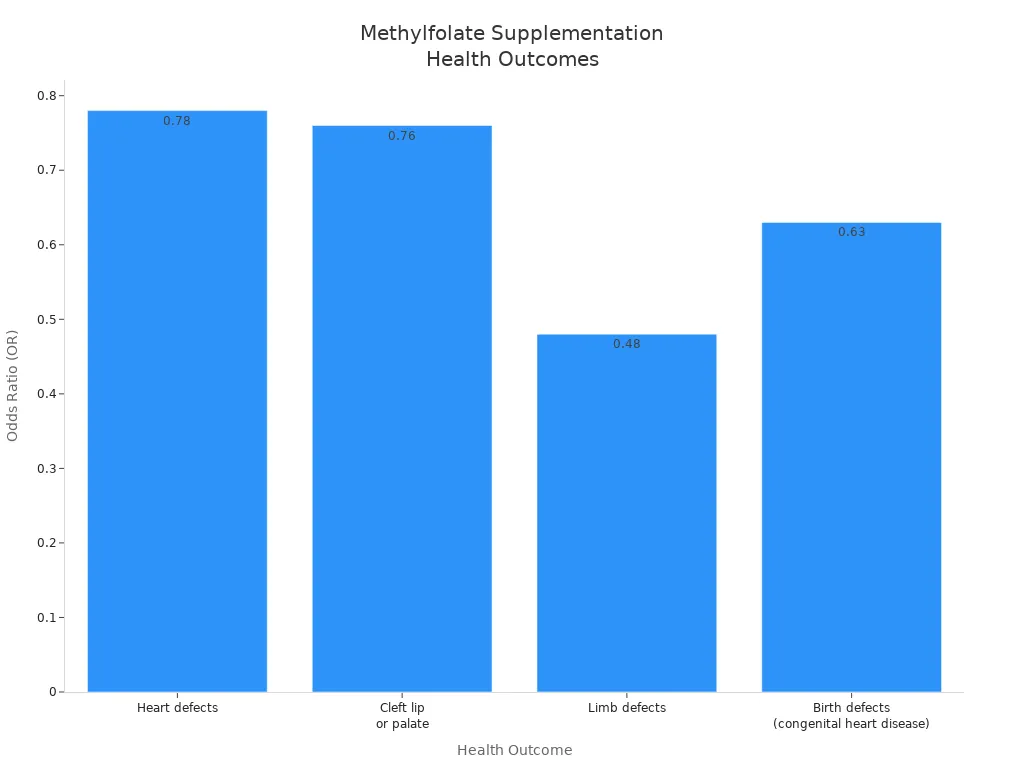
You can support your heart and mind by choosing methylfolate. Studies show that methylfolate lowers the risk of heart defects, birth defects, and improves cognitive health.
| Health Outcome | Odds Ratio (OR) | Significance |
|---|---|---|
| Heart defects | 0.78 | Significant |
| Cleft lip or palate | 0.76 | Significant |
| Limb defects | 0.48 | Significant |
| Birth defects (congenital heart disease) | 0.63 | p < 0.05 |
| Small for gestational age | 0.72 to 0.9 | Significant |
| Cognitive improvements in children | N/A | Positive association |
Always talk to your healthcare provider before starting supplements. Personalized advice helps you get the most benefit and avoid risks.
FAQ
What is the difference between methylfolate and folic acid?
You get methylfolate in its active form, so your body uses it right away. Folic acid is synthetic and needs conversion. Some people cannot convert folic acid well, so methylfolate works better for them.
Can you take methylfolate every day?
You can take methylfolate daily if your doctor recommends it. Most people use it safely in the right dose. Always check with your healthcare provider before starting any new supplement.
Who should consider methylfolate supplements?
You may need methylfolate if you have an MTHFR gene mutation, low folate levels, or certain health conditions. Pregnant women, older adults, and people with depression often benefit from methylfolate supplements.
Does methylfolate help with mood and brain health?
You support your mood and brain health with methylfolate. It helps your body make neurotransmitters like serotonin and dopamine. Many people notice better mood and clearer thinking when they get enough methylfolate.
Are there any side effects from taking methylfolate?
Most people tolerate methylfolate well. Some may feel headaches, nausea, or anxiety if they take too much. You should start with a low dose and talk to your doctor if you notice any problems.